
Inventory management sounds straightforward—track what comes in, track what goes out, repeat. But the reality is far messier. Misplaced stock, inaccurate counts, and outdated processes quietly chip away at efficiency, and most businesses don’t notice until the damage is done.
Whether you’re running a warehouse, a retail operation, or a manufacturing facility, these five mistakes are more common than you’d think—and more costly than most people realize.
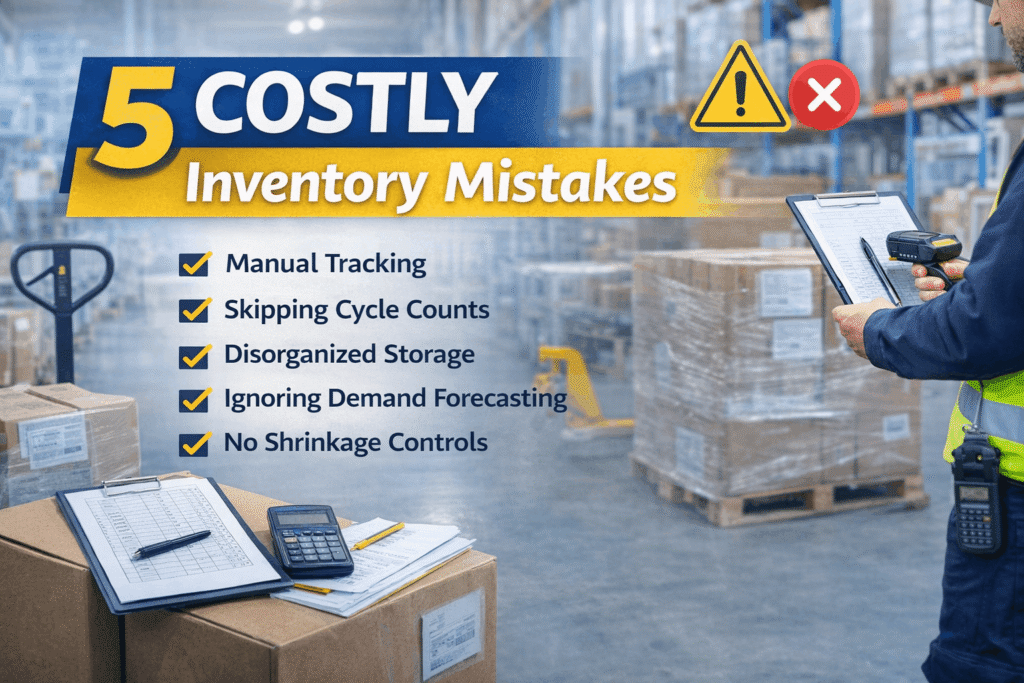
1. Relying on Manual Tracking
Spreadsheets and handwritten logs might work for a small side hustle, but they don’t scale. As your inventory grows, so does the risk of human error. A single mistyped figure or overlooked entry can throw off your entire stock count, leading to overselling, stockouts, or unnecessary reorders.
Manual tracking also takes time—time your team could be spending on higher-value tasks. Automating your inventory processes, even at a basic level, reduces errors and frees up your staff to focus on work that actually moves the needle.
2. Skipping Regular Cycle Counts
Annual stocktakes used to be the industry standard. Many operations still rely on them. The problem? A lot can go wrong in 12 months, and you won’t know about it until it’s too late.
Cycle counting—auditing a portion of your inventory on a rotating basis throughout the year—gives you a much clearer, more current picture of what you actually have on hand. It also makes discrepancies easier to catch and correct before they snowball into bigger problems.
If cycle counts aren’t already part of your routine, start small. Even auditing your highest-turnover items on a monthly basis can dramaticocally improve accuracy.
3. Poor Pallet and Storage Organization
Disorganized storage slows everything down. When pallets aren’t labeled clearly, or when goods are stored inconsistently, staff waste time searching for items, picking errors increase, and fulfillment slows to a crawl.
This is where structured labeling and location systems make a real difference. FID pallet tracking solutions, for example, give operations teams real-time visibility into where pallets are located, how long they’ve been in storage, and when they need to be moved—removing the guesswork from warehouse management entirely.
The fix doesn’t have to be complicated. Start by assigning clear location codes to every storage zone, and make sure all incoming pallets are labeled before they’re put away. Consistency is the goal.
4. Ignoring Demand Forecasting
Ordering based on gut feeling is a recipe for imbalance. Overstock ties up cash and takes up valuable space. Understock means missed sales and frustrated customers. Neither is a good outcome.
Demand forecasting uses historical sales data, seasonal trends, and lead times to predict what you’ll need and when. Most modern inventory management systems include some form of forecasting built in, making it easier than ever to order smarter.
If your current process doesn’t include any forecasting, even a simple review of your last 12 months of sales data can reveal patterns you didn’t know existed—and help you plan ahead more confidently.
5. Failing to Account for Shrinkage
Shrinkage—the loss of inventory due to theft, damage, spoilage, or administrative error—is something most businesses underestimate. It’s easy to assume your stock levels are accurate when you’re not regularly checking.
The impact adds up fast. Unaccounted shrinkage skews your inventory data, leads to inaccurate reordering, and can quietly erode your margins over time.
Addressing shrinkage starts with visibility. Regular cycle counts (see mistake #2) help surface discrepancies early. Pairing that with better physical controls—clear receiving procedures, damage tracking, and restricted access to high-value stock—gives you a much stronger foundation.
Fix the Fundamentals First
Inventory problems rarely appear overnight. They build gradually, usually as a result of small, fixable habits that have gone unchecked for too long. The good news is that most of these mistakes don’t require a complete operational overhaul to fix.
Start by auditing your current processes. Where are the gaps? Where are errors most likely to occur? Prioritize those areas first, and build from there. Small improvements to how you track, organize, and review your inventory can have a significant impact on your day-to-day operations—and your bottom line.
The businesses that manage inventory well aren’t necessarily doing anything exotic. They’re just doing the basics consistently, and paying attention to the details that others overlook.