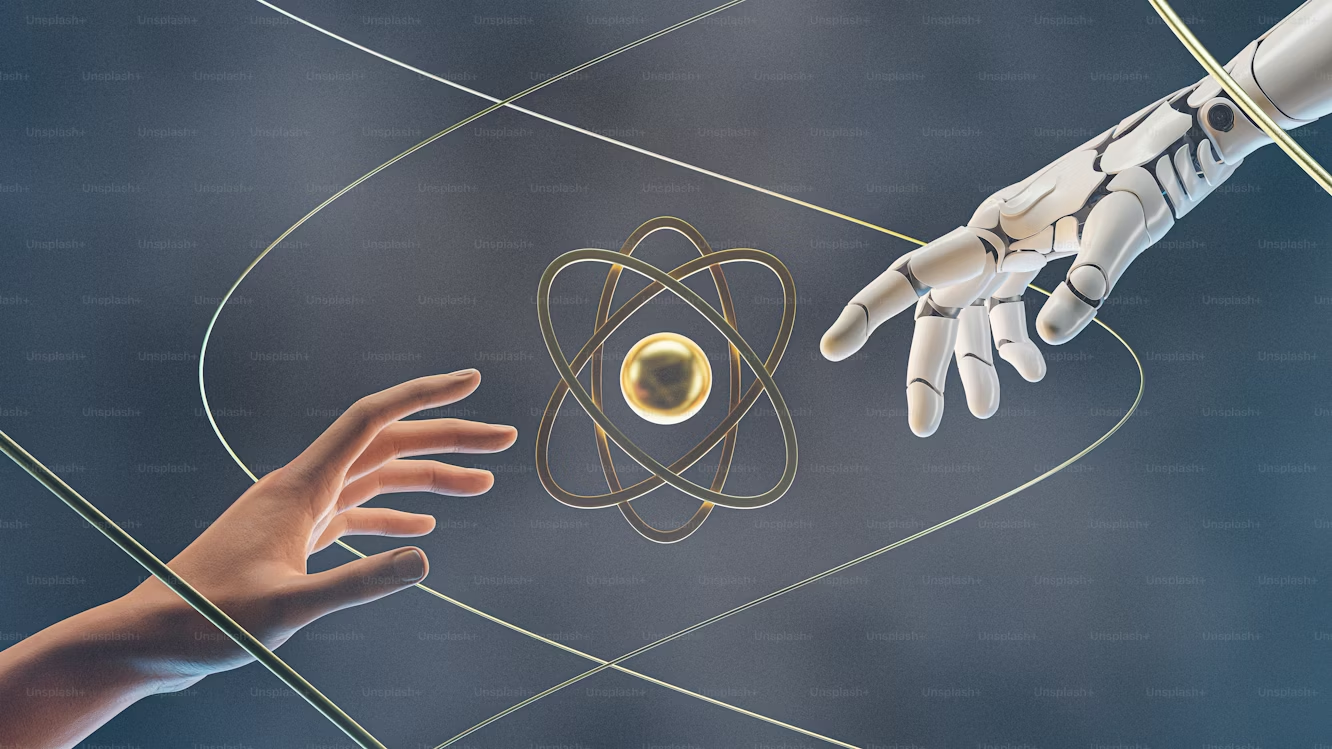
We have all interacted with a chatbot that felt like talking to a brick wall. It gives you the technical answer, but it misses the nuance, the frustration, or the urgency in your voice. This is where the next evolution of technology steps in. We are moving beyond simple data processing into an era of Humanized AI.
This shift isn’t just about making robots sound like people. It represents a fundamental change in how we design technology to understand, empathize, and interact with us on a deeper level. Let’s explore what Humanized AI actually is and why it is reshaping industries from healthcare to customer service.
What Is Humanized AI?
Humanized AI refers to artificial intelligence systems designed to mimic human behavior, emotion, and cognitive understanding. Unlike traditional AI, which focuses purely on logic and data retrieval, this approach prioritizes the user experience. It aims to make interactions feel natural, intuitive, and, most importantly, relatable.
Think of it as the difference between a textbook and a conversation. Traditional AI reads you the textbook. Humanized AI discusses the concepts with you, adapts to your learning style, and notices when you are getting confused.
The Core Elements
To truly “humanize” a machine, developers focus on three main pillars:
- Natural Language Processing (NLP): This allows the AI to understand slang, idioms, and context, not just literal keywords.
- Emotional Intelligence (EQ): Advanced algorithms analyze tone of voice or text sentiment to respond with appropriate empathy.
- Personality Consistency: The AI maintains a consistent “character,” building trust over time rather than resetting with every new query.
The Benefits of Bridging the Gap
Why does this matter? Do we really need our computers to have feelings? While machines don’t have feelings, their ability to simulate understanding creates tangible benefits for businesses and users alike.
1. Stronger Customer Connection
People trust people. When a brand uses Humanized AI, it removes the cold, sterile barrier often associated with automated support. A chatbot that says, “I understand this billing error is frustrating, let me fix that for you right away,” works infinitely better than one that simply states, “Error code 404 processed.” This emotional acknowledgment builds loyalty.
2. Improved Accessibility
Technology can be intimidating. For elderly users or those less tech-savvy, a command-line interface or a complex dashboard is a barrier. An AI that speaks in plain, conversational language invites more people to use the technology effectively. It democratizes access to digital tools.
3. Higher Engagement Rates
When users feel heard, they stay longer. Applications using Humanized AI see higher engagement because the interaction feels like a dialogue rather than a transaction. Whether it’s a language learning app encouraging you after a mistake or a fitness tracker celebrating a small win, these human touches keep users motivated.
Real-World Applications
You likely encounter this technology daily without realizing it. Here is how different sectors are deploying these empathetic algorithms.
Healthcare and Mental Wellness
This is perhaps the most impactful area. Apps like Wysa or Woebot use Humanized AI to provide mental health support. They don’t replace therapists, but they offer a safe, non-judgmental space for users to express their feelings at 2 AM. The AI detects distress and responds with calming, clinically-approved techniques, bridging the gap when human help isn’t immediately available.
Customer Service and Support
Gone are the days of rigid phone trees. Modern support bots can detect if a customer is angry or sarcastic. If the AI senses high frustration, it can escalate the issue to a human agent immediately, passing along the context so the customer doesn’t have to repeat themselves. This hybrid approach saves time and reduces anger.
Education and Tutoring
A human teacher notices when a student is bored or struggling. Adaptive learning platforms now use Humanized AI to do the same. If a student takes too long on a math problem, the AI might offer a hint with a supportive tone, or suggest a break, mimicking the intuition of a good tutor.
The Future of Humanized Technology
As we look forward, the line between digital and physical interactions will continue to blur. We aren’t just looking at better chatbots; we are looking at digital companions.
Hyper-Personalization
Future AI won’t just know your name; it will know your preferences, your humor style, and your stress triggers. It will adjust its communication style to match yours perfectly. If you prefer direct, bullet-point answers, your AI will learn that. If you prefer a friendly chat, it will adapt.
Ethics and Transparency
With great power comes great responsibility. As Humanized AI becomes more convincing, transparency becomes critical. Developers must ensure users know they are speaking with a machine, even if it feels human. We must prioritize ethical guidelines to prevent manipulation and ensure these tools support human connection rather than replace it.
Conclusion
Humanized AI is more than a buzzword; it is the necessary next step in our relationship with machines. By teaching our technology to understand empathy, context, and conversation, we make it more useful, more accessible, and ultimately, more human.
As these tools evolve, they promise a future where technology doesn’t just work for us—it works with us.
