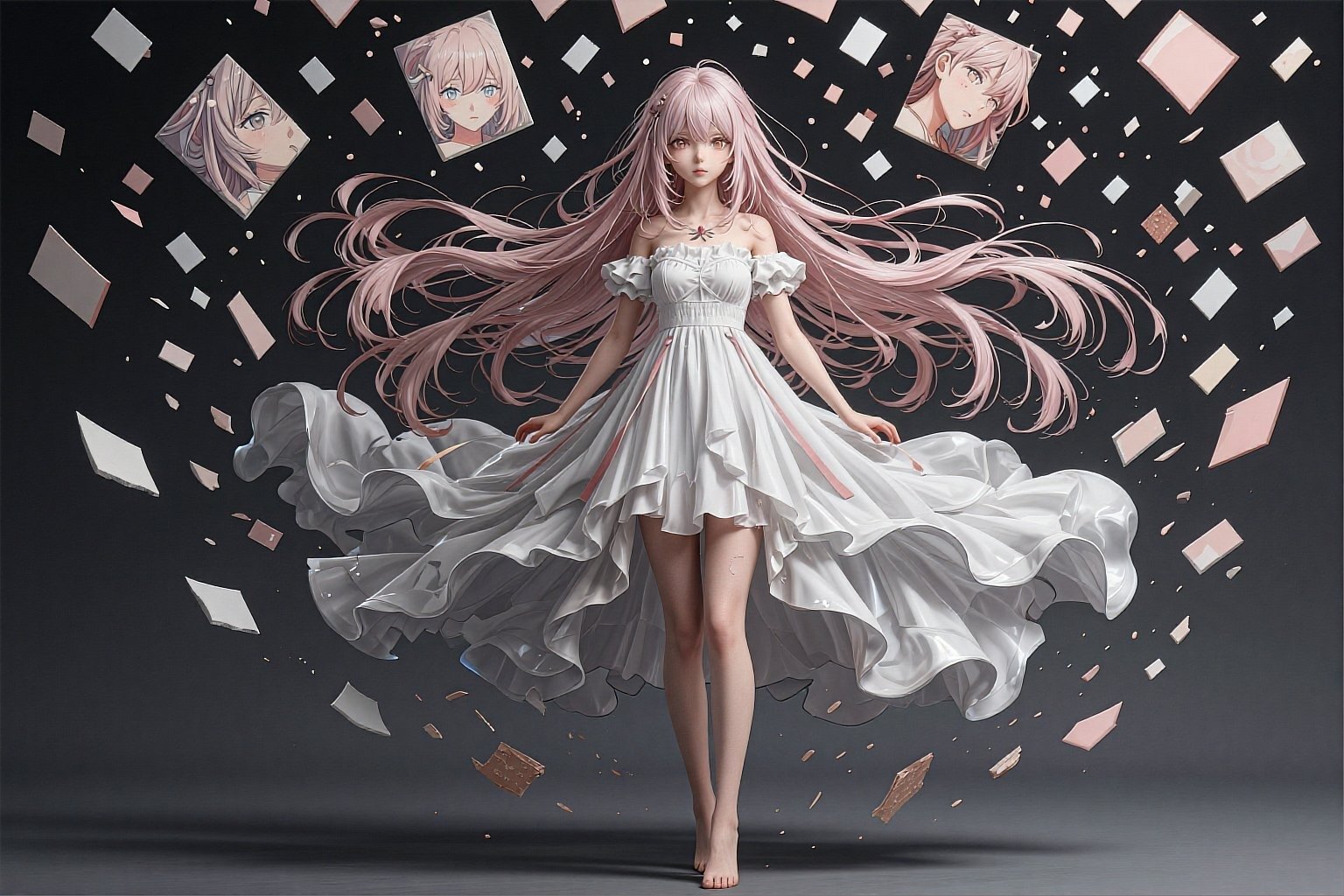
I’ve found that the hardest part of building an original character is rarely the idea itself. Most people already know the feeling they want: maybe a cold-looking swordswoman, a shy pink-haired student, or a chaotic side character with an oversized jacket and too much attitude. The real difficulty begins when that idea has to become an image. That gap between imagination and visualization is exactly why I think character-generation tools have become so practical. A useful OC generator does not replace taste or originality. It gives both of them a shape I can actually work with.
1. Character ideas usually arrive faster than visual clarity
When I talk to creators, or even just watch how people describe their own characters online, I keep seeing the same thing: the emotional core is already there, but the visual specifics are still blurry.
Someone may know their character is “quiet, smart, slightly intimidating, but elegant.” That sounds complete until the design work begins. Suddenly, every small choice matters. What hairstyle supports that mood? Should the eyes look sharp or tired? Does the outfit lean formal, futuristic, gothic, or school-inspired? Is the color palette muted, dramatic, or playful? Those questions are where people get stuck.
This is one reason early-stage character design used to feel inaccessible to people who could imagine well but could not draw quickly. I do not think AI changes the importance of human judgment. What it changes is the speed of exploration. Instead of sitting in front of a blank page waiting for the right drawing to appear, I can now test the shape of an idea much earlier and react to something visible.
That alone makes the process feel less abstract.
2. What an OC generator actually helps me solve
In my experience, the best use of an OC generator tool is not “press a button, get a final masterpiece.” It is much more practical than that.
I use it to reduce uncertainty. If I already know the character’s role, energy, and rough visual direction, a generation tool helps me see whether those decisions are working together or fighting each other. A hairstyle may feel right in theory and wrong in the image. A costume may be detailed but generic. A face may look pretty while completely missing the intended personality.
That is the value. The tool gives me something to push against.
I’ve also noticed that people with no formal drawing background often benefit the most. They are not blocked by lack of imagination. They are blocked by the difficulty of converting internal ideas into visible options. Once they can compare a few design directions side by side, their judgment becomes much sharper very quickly.
A good character workflow often starts with broad exploration:
- face shape
- hair silhouette
- outfit category
- color mood
- expression tone
Once those are visible, even in rough form, the character stops feeling theoretical.
3. From a rough character concept to polished anime-style art
After the base design starts making sense, style becomes the next real question.
This is where I see a lot of weak outputs. A character can be recognizable but still not feel complete. The proportions may work, the clothing may be decent, and the idea may come through, but the image still lacks visual identity. That is especially true for anime-inspired work, where line language, rendering style, facial emphasis, and color harmony affect how “finished” the character feels.
At that stage, I usually separate design from presentation. First I ask whether the character works. Only after that do I ask whether the art style is doing the character justice. When I want to push that second part further, I move into a more style-driven workflow with an AI anime art generator online.
That step matters because anime-style rendering does more than decorate an image. It clarifies it. It can sharpen a character’s emotional readability, improve silhouette appeal, and make the whole concept feel more intentional.
Here is the framework I tend to use:
| Stage | Main goal | What I check |
| Character idea | define identity | Does the personality feel distinct? |
| Rough visual draft | test key features | Do hair, clothes, and face match the idea? |
| Anime stylization | refine presentation | Does the image now feel complete and shareable? |
Breaking the work into stages gives me better results than trying to force concept, emotion, style, costume, and polish into one overstuffed prompt.
4. Why anime-style OC creation works so well for online creators
Anime-style character art has a strange advantage: it communicates personality very fast.
That is one reason it works so well for profiles, social sharing, fandom spaces, story pitches, and character reference pages. It does not need to be fully realistic to feel convincing. In fact, its strength often comes from selective exaggeration. Slightly sharper eyes, more intentional bangs, a cleaner costume silhouette, or a more dramatic expression can make a character memorable in seconds.
I’ve also found that anime aesthetics give creators more room to define identity through mood. A realistic portrait often competes with realism itself. An anime image can focus more directly on vibe, symbolism, and role. That makes it ideal for characters that are meant to feel stylized from the beginning.
For creators building OCs for fiction, games, social posts, or personal branding, that flexibility is hard to ignore.
5. Where I see these tools being used most often
The strongest use cases tend to be surprisingly practical.
Some people use them to draft character sheets for stories they are writing. Others generate visual references for roleplay communities, social media avatars, or comic ideas they have not fully developed yet. I also see them used as moodboard tools: not to create the final canon version of a character, but to narrow down what the character should feel like.
The most common use cases I’ve seen include:
| Use case | Why it works |
| Character ideation | Fast way to test whether a concept feels distinct |
| Profile or avatar creation | Anime styles are highly readable at small sizes |
| Story development | Visual design helps clarify role and personality |
| Reference building | Useful for outfit, color, and mood consistency |
| Fandom or community sharing | Easy to present and iterate publicly |
What matters here is not novelty. It is efficiency. The tool helps move a creator from “I have a character in mind” to “I can actually show you who this is.”
6. What I pay attention to when generating anime character art
The biggest mistake I see is trying to control too much at once.
When people are excited about a character, they want every detail included immediately: hair length, accessories, backstory clues, specific eye shape, fashion references, mood, camera angle, lighting, worldbuilding, and five separate personality traits. In practice, that often makes the result less coherent, not more.
I get better outputs when I prioritize. I start with one dominant trait and one visual anchor. Maybe the anchor is “soft but eerie expression,” or “athletic school-uniform silhouette,” or “dark red palette with ceremonial details.” Once that part feels stable, I add secondary traits.
A few habits help:
- keep the first prompt focused on identity, not perfection
- lock the hairstyle and outfit direction before chasing tiny details
- treat color as mood, not decoration
- iterate in layers rather than rewriting the whole concept every time
This is the part people sometimes underestimate. Better results often come less from “better AI” and more from cleaner visual thinking.
7. Why I think AI tools have changed original character creation for good
I do not think these tools replace artists, and I do not think that is the right comparison anyway. What they have changed is access.
Original character design used to feel like a space where only skilled illustrators could move efficiently. Now the early stages are much more open. Writers, hobbyists, worldbuilders, game players, and casual creators can all build and test visual identities without waiting until they master drawing fundamentals. That does not remove the value of craft. It gives more people a meaningful entry point.
From what I’ve seen, that is why character-generation tools keep growing. They help translate taste into visuals, and they shorten the distance between imagination and expression. For a lot of creators, that distance used to be the hardest part.
Now it is much easier to cross.
