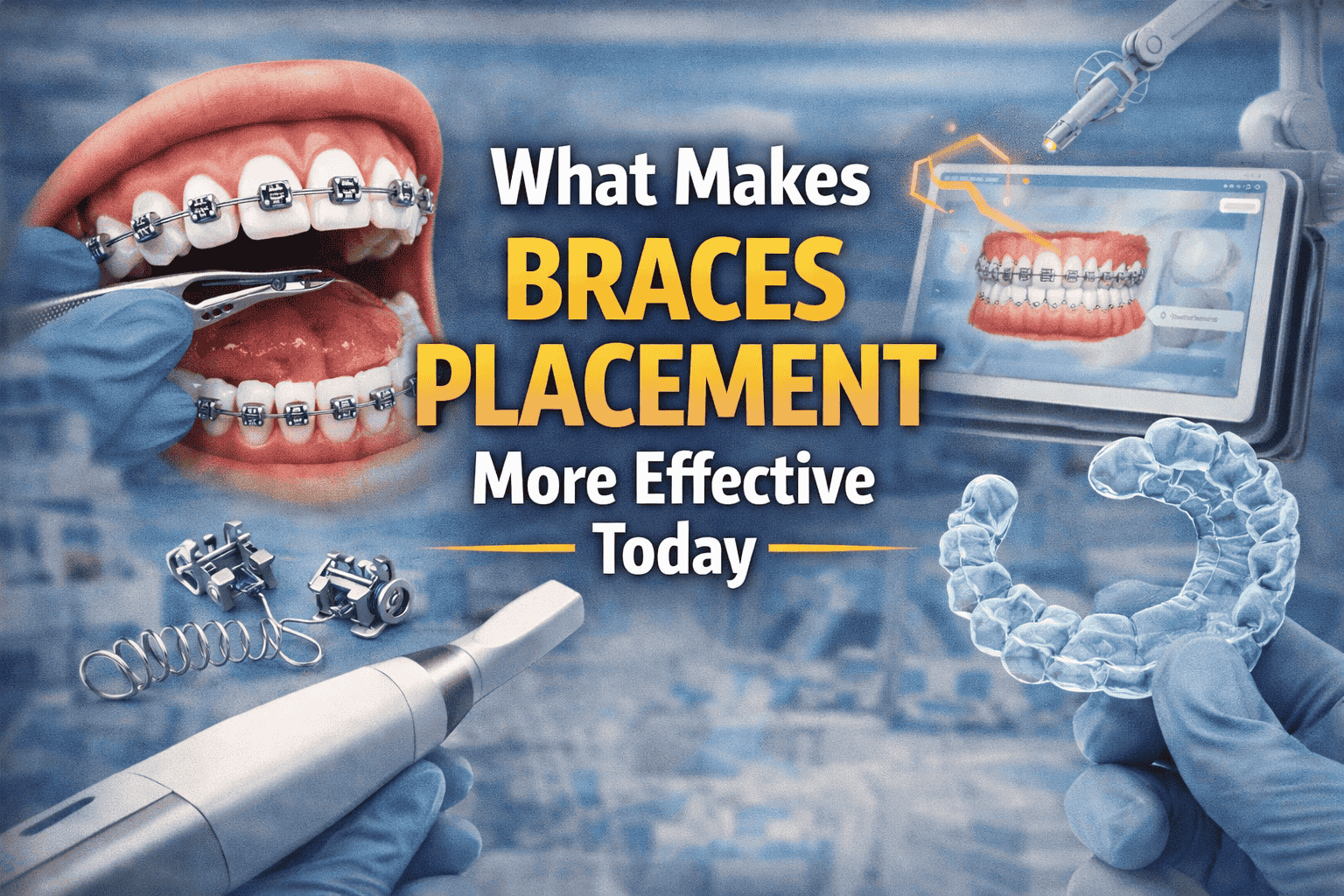
Orthodontic treatment, particularly how braces are applied, has evolved significantly over the years. Previously, placement relied on manual measurements and traditional techniques. Today, advanced technology has made the process more precise, efficient, and comfortable. A key improvement is the development of bonding, a method allowing orthodontists to attach brackets with greater accuracy. This modern approach ensures brackets are positioned correctly from the start, reducing the need for adjustments and improving treatment outcomes. As orthodontic care advances, patients benefit from shorter treatment times and more predictable results, with a focus on precision that supports long-term dental health.
Advanced Materials Improve Bracket Adhesion and Durability
One of the key factors in modern braces placement is the use of improved bonding materials. Today’s orthodontic adhesives create strong, reliable connections between brackets and teeth, and they are safer and more durable than earlier versions. This strong adhesion is crucial, as brackets must remain securely attached throughout treatment to avoid delays and extra appointments. Newer materials are also formulated to protect tooth enamel while maintaining a firm hold, preventing damage when the braces are removed. This combination of strength and safety gives patients confidence and supports consistent, gentle pressure on the teeth, leading to more controlled movement and predictable results.
Digital Technology Enhances Placement Accuracy
Digital technology has transformed how orthodontists plan and place braces. Tools like digital imaging and 3D modeling allow professionals to map out tooth positions with remarkable precision. This technology helps determine the ideal placement for each bracket before the procedure, reducing guesswork and ensuring the braces will move teeth efficiently. Digital systems can also simulate treatment outcomes, which helps identify potential challenges early and allows for adjustments to the plan. This level of planning leads to smoother progress and fewer delays. Patients benefit from better communication, as visual models make it easier to understand the treatment process and expected results, building trust and cooperation.
Improved Techniques Reduce Treatment Time
Modern orthodontic techniques have been refined to make placing braces faster and more effective. Orthodontists now use standardized, efficient procedures that prioritize accuracy, ensuring brackets are aligned correctly from the initial appointment. This precise placement reduces the need for frequent adjustments, leading to fewer appointments and shorter overall treatment times. Patients appreciate the convenience of a streamlined process that fits their busy schedules. Additionally, correct placement enhances comfort by applying balanced pressure to the teeth, reducing unnecessary strain. Comfortable treatment encourages patients to be consistent with their appointments and oral care, which is essential for successful and steady progress.
Patient Education and Preparation Play a Vital Role
Better patient education also contributes to more effective braces placement. Orthodontists now spend more time preparing patients for treatment and explaining how to care for their braces. This knowledge helps reduce anxiety and makes patients feel more confident. Well-informed patients are more likely to follow recommendations, such as avoiding certain foods and brushing regularly, which helps protect the bonding and keep brackets secure. These good habits lead to smoother progress and fewer complications, empowering patients to take an active role in their orthodontic care and ensuring long-term success.
Enhanced Comfort and Patient Experience
Comfort is a major priority in modern orthodontics, and advances in placement techniques have made getting braces more comfortable than ever. Modern equipment and refined methods reduce the time and discomfort of the bonding procedure, leading to less irritation and faster adjustment periods. The process of bonding teeth braces has seen significant improvements, and the designs and materials used also help braces fit more naturally, making daily activities like eating and speaking easier. This positive experience encourages patients to stay committed to their orthodontic plan, building trust and ensuring long-term satisfaction. Orthodontic practices further enhance comfort by creating a welcoming environment, offering supportive guidance, and maintaining friendly communication from the first appointment to the final adjustment.
Conclusion
The future of orthodontics will be defined by precision, efficiency, and patient comfort. Innovations in materials and technology are set to further refine brace placement, with potential advancements like intelligent planning tools, quicker bonding methods, and enhanced monitoring systems on the horizon. These developments aim to help orthodontists deliver more accurate and reliable outcomes. As technology progresses, patients can look forward to orthodontic treatments that are increasingly convenient and effective. Today, the combination of better materials, advanced technology, and comprehensive patient education makes braces placement more successful than ever, contributing to a smoother treatment process and healthier, more confident smiles.
