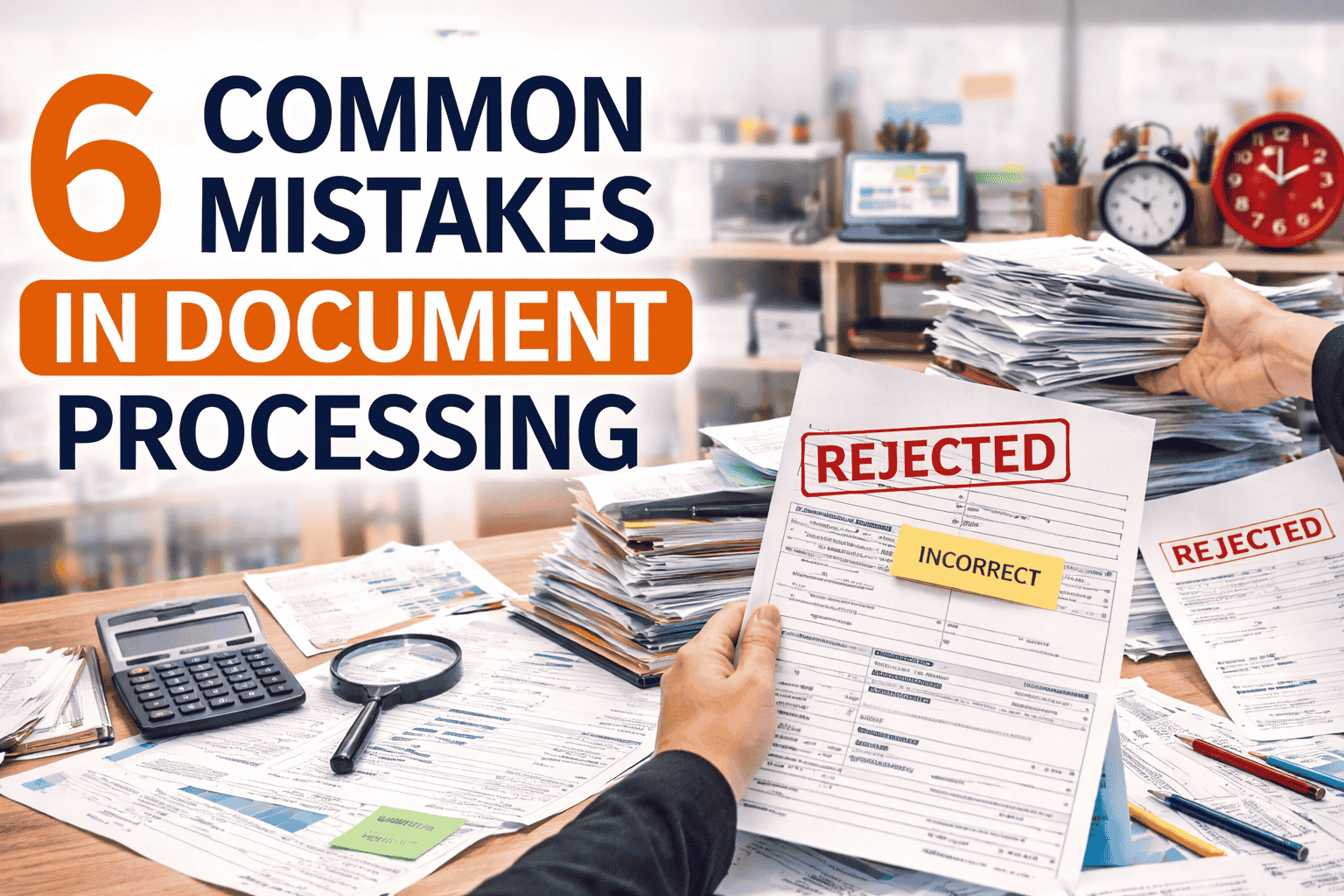
Processing official document requires meticulous attention to detail and a thorough understanding of procedural rules. Whether handling corporate contracts, government petitions, or complex legal applications, a single oversight can lead to severe delays, financial losses, or complete case dismissals.
Government and legal agencies process millions of applications annually, and statistics indicate that a significant percentage of these are rejected simply due to preventable administrative errors. Understanding these common pitfalls allows applicants and professionals to streamline their paperwork, prevent unnecessary bureaucratic hurdles, and ensure successful processing. Read on to discover the six most frequent document processing errors and the pragmatic strategies you can implement to avoid them.
1. Missing Signatures or Dates
Forgetting to sign or date a legal document is the most frequent reason for an immediate application rejection. Processing centers, particularly federal and legal institutions, rely on original, properly dated signatures to validate the authenticity of a request and the identity of the applicant. An unsigned form is legally void and will be returned without any review of its contents. In many cases, applicants also confuse the requirements for wet signatures (physical ink) versus electronic signatures, leading to technical rejections even when a signature is present.
Tip: Always implement a final review phase dedicated solely to checking signature blocks. Use bright sticky notes on physical papers or digital flags on PDFs to highlight required signature fields before distributing the documents for execution. Double-check the receiving agency’s specific rules regarding acceptable electronic signatures.
2. Submitting Expired or Outdated Forms
Government agencies and legal institutions update their official forms and fee schedules regularly to reflect new policies or legislation. Submitting an obsolete version of a form guarantees that the processing center will reject the packet outright. For instance, when preparing a DACA renewal, utilizing an outdated form version or failing to include the most recently updated filing fee will result in an automatic return of the entire application. This can be devastating if an applicant is facing a tight expiration deadline.
Tip: Always download forms directly from the official agency website on the exact day you begin filling them out, rather than relying on saved files on your local computer. Verify the edition date, which is typically located at the bottom corner of the document, against the accepted dates listed on the official site.
3. Providing Incomplete Supporting Evidence
Official forms rarely stand alone; they usually require a specific set of supporting documents to prove the claims made within the application. Submitting incomplete evidence—such as missing bank statements, partial tax returns, or failing to provide continuous residential records—triggers immediate requests for additional information. These formal requests can halt the processing timeline for several months, leaving applicants in a state of extended uncertainty while the agency waits for the missing files.
Tip: Create a comprehensive checklist based strictly on the agency’s official filing guidelines. Cross-reference every requested item before sealing the envelope or hitting submit. Ensure that multi-page attachments include every page, even if the final page is intentionally left blank.
4. Ignoring Formatting and Translation Requirements
Many processing centers enforce strict formatting and assembly rules to ensure their scanning equipment can read the incoming paperwork accurately. These rules often mandate specific ink colors (usually black), single-sided printing, or the removal of staples and heavy binder clips. Furthermore, any documents originating in a foreign language must be accompanied by a complete English translation. Failing to provide a proper certification letter from the translator renders the foreign document entirely useless to the adjudicator.
Tip: Thoroughly review the general filing instructions provided by the receiving agency before assembly. If you must submit foreign birth certificates, marriage licenses, or legal records, always hire a certified translator who will provide a signed and dated statement attesting to the accuracy of the translated text.
5. Failing to Keep Copies of Submitted Documents
Once a document packet leaves your hands and enters the mail system, there is always a risk it could be lost in transit or misplaced by the receiving facility. Applicants who fail to keep exact copies of their submissions face massive hurdles if they need to reconstruct their case, file an appeal, or respond to a specific inquiry about the answers provided on the original forms. Relying on memory for complex applications is a recipe for administrative disaster.
Tip: Scan the entire document packet, including any checks or money orders used for filing fees, immediately before submission. Store these digital copies in a secure, encrypted folder on a cloud drive, and keep a printed physical copy organized in a fireproof safe or secure filing cabinet.
6. Missing Important Deadlines
Timing is a critical component of successful document processing. Many applications have strict statutory filing windows, expiration dates for submitted evidence (such as medical exams or background checks), or tight deadlines for responding to official government notices. Missing a submission deadline by a single day can force you to restart the entire process from the beginning, resulting in the loss of previous filing fees and the potential loss of legal status or benefits.
Tip: Treat official submission deadlines as soft targets. Set your own internal deadline at least two weeks prior to the actual due date. Utilize digital calendar alerts, project management software, and certified mail tracking to ensure time-sensitive materials arrive well before the cutoff.
Meticulous document processing is an essential skill that saves resources, prevents unnecessary stress, and protects your legal standing. By addressing these common mistakes—ranging from overlooked signatures to poorly assembled evidence—individuals and organizations can drastically improve their documentation approval rates. Implementing strict review protocols, maintaining highly organized records, and staying proactively informed about form updates are the most effective strategies for navigating complex administrative requirements successfully.
