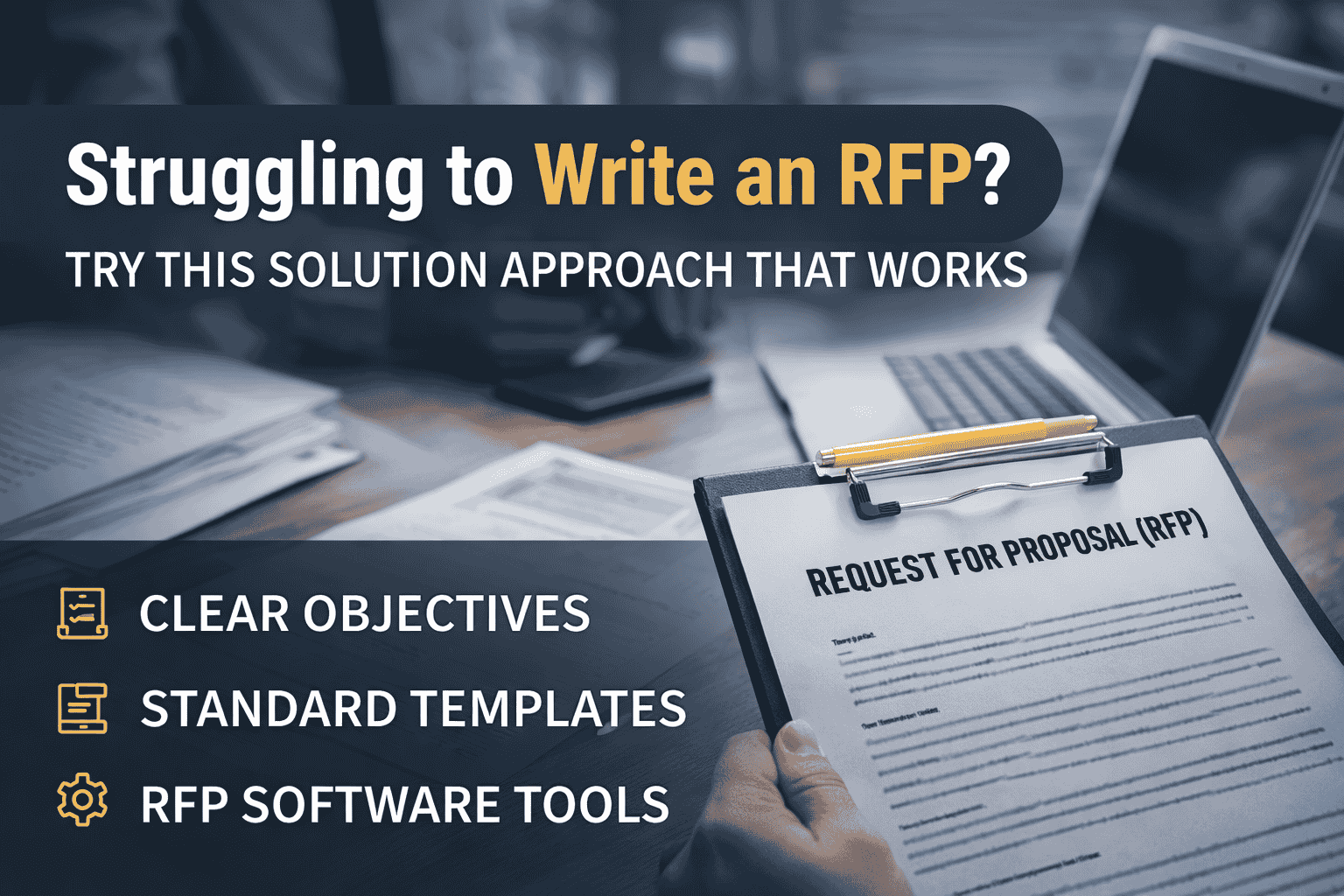
Writing a Request for Proposal (RFP) can be a perplexing task. Despite the necessity of RFPs in obtaining competitive bids for services or products, businesses often struggle with a process that’s perceived as convoluted and time-consuming. Crafting an RFP that is clear, concise, and capable of eliciting valuable responses requires both skill and strategy.
The goal is to create a document that communicates your needs effectively while making it simpler for potential vendors to submit their best propositions. In this article, we explore practical solutions that streamline the RFP creation process and increase the chances of finding the right provider for your business needs.
Overcoming the Challenge of RFP Creation
One of the first hurdles to clear is understanding what makes a strong RFP. The foundation of an effective RFP is clarity—ensuring that the objectives, scope, and criteria are well-defined. Ambiguities lead to poor responses and ultimately, to selections that might not serve the best interests of your company.
To improve clarity, avoid industry jargon and overly technical language unless absolutely necessary. Instead, focus on outlining expectations in a way that is accessible to all potential bidders. This encourages a wide range of proposals, giving your company a diverse pool of options to consider.
Additionally, the RFP should include a timeline, providing detailed information on submission deadlines, decision dates, and project start dates. This can help alleviate the stress of uncertainty for both the issuing company and the potential vendors. Timelines promote transparency and ensure that all parties are aware of the selection process’s pace.
To streamline the process, it is essential to understand how to write an rfp that effectively addresses your needs.
Streamlining Your RFP Process with These Strategies
Streamlining the RFP process starts with internal preparation. A cross-functional team should gather to map out the project’s requirements before drafting the document. Bringing together individuals from different departments ensures a comprehensive view of the needs and expectations.
Next, standardizing your RFP template can save time and reduce confusion. By having a consistent format and set of questions, businesses can compare responses more easily and quickly identify the most promising proposals. It becomes simpler to spot unique solutions that vendors bring to the table when there is a common baseline for comparison.
Finally, consider setting up a Q&A period where bidders can ask clarifying questions. This step can significantly improve the quality and accuracy of the responses received, as it ensures that vendors understand your requirements. Be transparent about the Q&A process, and ensure the questions and answers are made available to all bidders to maintain a fair competition.
Innovative Tools to Simplify Your RFP Writing
The advent of dedicated RFP software has revolutionized the way businesses approach the RFP writing task. These innovative tools are designed to automate and facilitate various parts of the RFP process, from creating templates to evaluating responses.
RFP management platforms can significantly reduce the time spent on administration and documentation. These platforms offer features such as collaborative writing, version control, and response tracking, which improve efficiency and help maintain consistency across multiple RFPs. With such tools in hand, teams can produce higher-quality RFPs at a faster rate.
Actionable guidance involves researching and selecting a software that fits your business’s particular needs. Evaluate options based on key features like integration capabilities, user-friendliness, and customer support. Investing in an RFP platform can lead to long-term savings through increased productivity and more strategic vendor choices.
Measuring the Success of Your RFP Approach
A structured approach to evaluating the success of your RFP process is critical. One way to measure this is by tracking the number of quality responses received. An increase in detailed, relevant proposals indicates that your RFP communicates its intent effectively and is reaching the right audience.
Assess the feedback from participating vendors as well. Constructive comments can provide insights into how the RFP could be improved for future solicitation. By maintaining open channels for feedback, companies can continuously refine their RFPs, leading to even more successful outcomes over time.
Beyond immediate responses, track the performance of selected vendors against the requirements laid out in the RFP. This longer-term measurement ensures that the RFP process is not only efficient at the selection stage but also effective in identifying partners who can deliver on their promises and contribute to the success of the project.
Overall, the effectiveness of an RFP is not just in its writing but in the results it yields. By adopting a clear, standardized approach and leveraging innovative tools, businesses can optimize their RFP process, enabling them to select the best vendors efficiently. This strategy not only simplifies the task at hand but also enhances the potential for successful partnerships and project outcomes.
