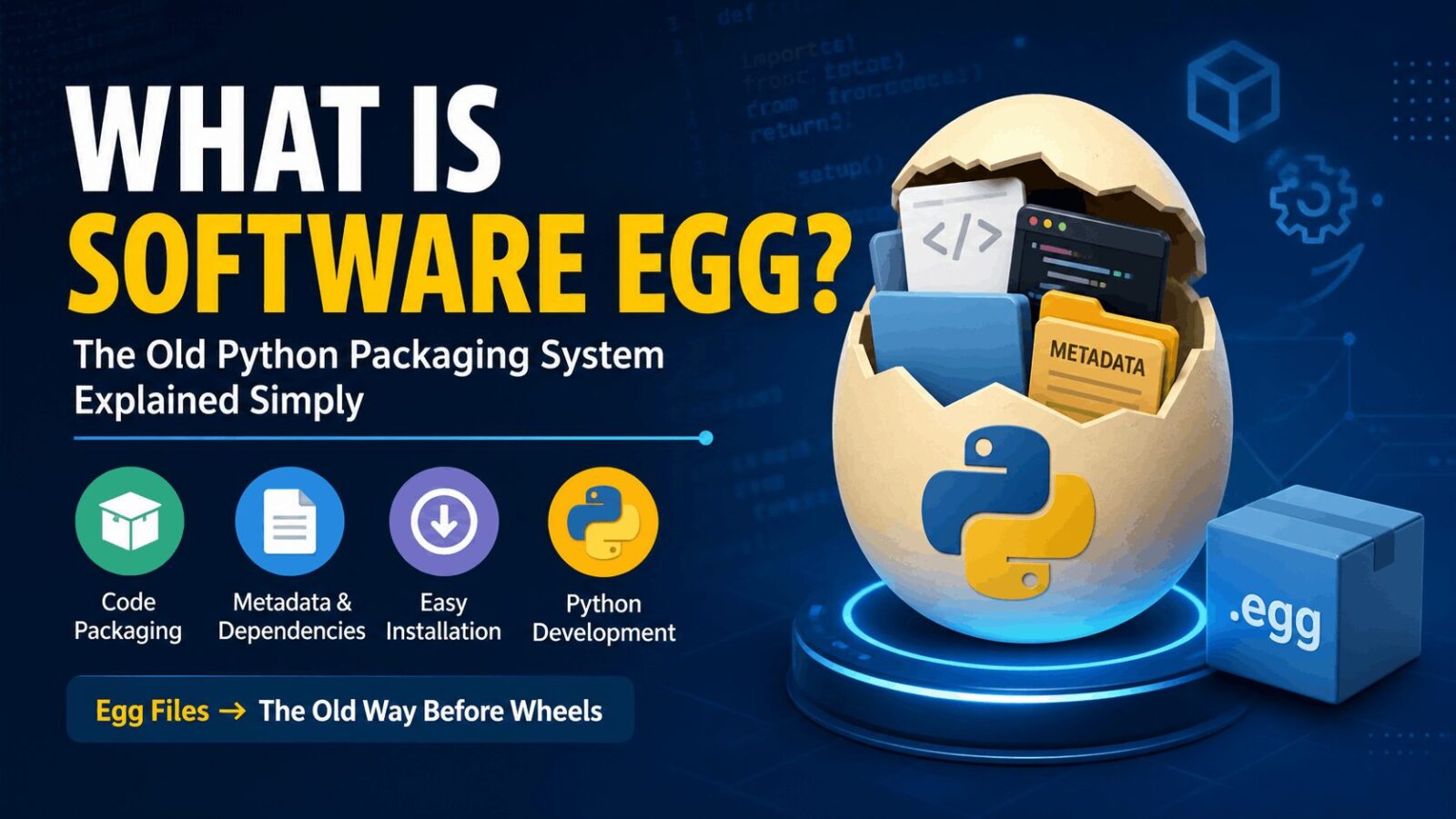
If you’ve been searching for software egg, you’re probably a bit confused.
And honestly… that’s normal.
Because the term “software egg” doesn’t show up in everyday tech talk anymore. It feels old, a bit technical, and sometimes people mix it up with different software packaging concepts.
But in most real technical contexts, software egg is linked to Python packaging systems used in older development workflows.
In this guide, I’ll explain it in a simple way—no heavy coding language, just clear understanding.
What is Software Egg?
Software egg is a packaging format used in Python development to distribute and install software libraries.
It was introduced with Python tools, like setuptools.
Think of it like a box.
A container that holds:
- Code files
- Metadata
- Dependencies
- Installation instructions
So instead of sharing raw code, developers could share a “packaged version” of software.
That package was called an “egg”.
Why is it called “Egg”?
The name sounds strange at first.
But the idea is simple:
An egg is a complete unit that can “grow” into something functional.
A software egg has everything a program needs to work after its installed.
It’s an idea… that’s all.
How Software Egg Works (Simple Steps)
Let’s break it down in an easy flow.
Step 1: Code is written
Developers create a Python project.
Step 2: It is packaged
Using tools like setuptools, the project is bundled into an egg file.
Step 3: Dependencies are added
Required libraries are included or referenced.
Step 4: Egg file is created
The final output becomes a distributable package.
Step 5: Installation
Other users install the egg and use the software.
So basically, it turns code into a reusable package.
Structure of a Software Egg
A software egg usually contains:
- Python modules
- Metadata files
- Dependency information
- Resource files
Think of it like a zipped folder… but structured for Python systems.
Software Egg vs Modern Packaging
Now here’s where things get interesting.
Software eggs are actually considered outdated now.
Modern Python uses a different system called wheels.
Let’s compare them.
Comparison Table: Egg vs Wheel
| Feature | Software Egg | Wheel |
|---|---|---|
| Era | Older system | Modern standard |
| Tool used | setuptools | pip + wheel |
| Speed | Slower installation | Faster installation |
| Compatibility | Limited | Widely supported |
| Maintenance | Low | Active |
So yeah… wheels replaced eggs over time.
Why Software Egg Became Outdated
1. Performance issues
Eggs were slower to install.
2. Compatibility problems
Not all systems supported them properly.
3. Better alternatives arrived
The wheel format improved everything.
4. Python ecosystem evolved
Tools like pip became standard.
So eggs slowly faded out.
Where Software Egg Was Used
Even though it’s outdated, it was used in:
- Early Python projects
- Open-source libraries
- Internal company tools
- Software distribution systems
It played an important role back then.
Advantages of Software Egg (At That Time)
Let’s not ignore its value.
1. Easy distribution
Developers could share software easily.
2. Bundled dependencies
Everything was packed together.
3. Reusable format
Once created, it could be reused multiple times.
4. Simplified installation
Users didn’t need to manage code manually.
Disadvantages of Software Egg
Now the reality side.
1. Old format
It became outdated quickly.
2. Limited support
Modern tools stopped focusing on it.
3. Slower performance
Not optimized like newer formats.
4. Compatibility issues
Didn’t work smoothly across environments.
Software Egg in Simple Words
If I had to explain it simply:
A software egg is just an old way of packaging Python code so others can install and use it easily.
That’s it.
No need to overthink it.
Is Software Egg Still Used Today?
Not really.
Most modern developers use:
- Wheel packages
- pip installations
- virtual environments
Eggs are mostly seen in legacy projects (old systems that still run outdated code).
Modern Replacement of Software Egg
1. Wheel format (.whl)
Faster and more efficient packaging.
2. pip installer
Handles installation smoothly.
3. PyPI (Python Package Index)
Main source of libraries.
These systems replaced eggs completely in most workflows.
Why Understanding Software Egg Still Matters
You might be thinking… why even learn this?
Good question.
It still matters because:
- Old systems still exist
- Legacy codebases use eggs
- Interviews may ask basic concepts
- Helps understand Python evolution
So it’s more about knowledge than daily use.
Real-World Example (Simple Idea)
Imagine this:
You build a small app.
Instead of sending raw files, you pack everything into one box.
That box = software egg.
Someone else opens it and installs everything instantly.
That’s the concept.
Common Confusion About Software Egg
Many people confuse it with:
- Random software tools
- Malware “egg” files
- Game mods
- Unknown download packages
But in reality, it’s a structured Python packaging system.
Step-by-Step: How Egg Files Were Created
Just for understanding:
Step 1: Install setuptools
Step 2: Create setup file
Defines project details.
Step 3: Build egg
Command generates .egg file.
Step 4: Distribute file
Share with users or systems.
Step 5: Install
System extracts and uses it.
FAQs
What is software egg?
It is an older Python packaging format used to distribute software libraries.
Is software egg still used?
Rarely. It has been replaced by wheel format.
What replaced software egg?
Wheel (.whl) files and modern pip-based packaging.
Is software egg important to learn?
Only for understanding legacy systems and Python history.
Is software egg safe?
Yes it’s a format. How safe it is depends on where the code comes from.
Conclusion
So yeah… software egg is basically an old packaging system used in Python development.
It helped developers share and install software in a structured way using tools like setuptools and installers like pip.
But over time, it got replaced by better systems like wheel files.
Today, you won’t see it much in modern development… but it still has historical importance.
It’s one of those concepts that helped shape how software distribution works now.
Simple, outdated… but still part of the story.
