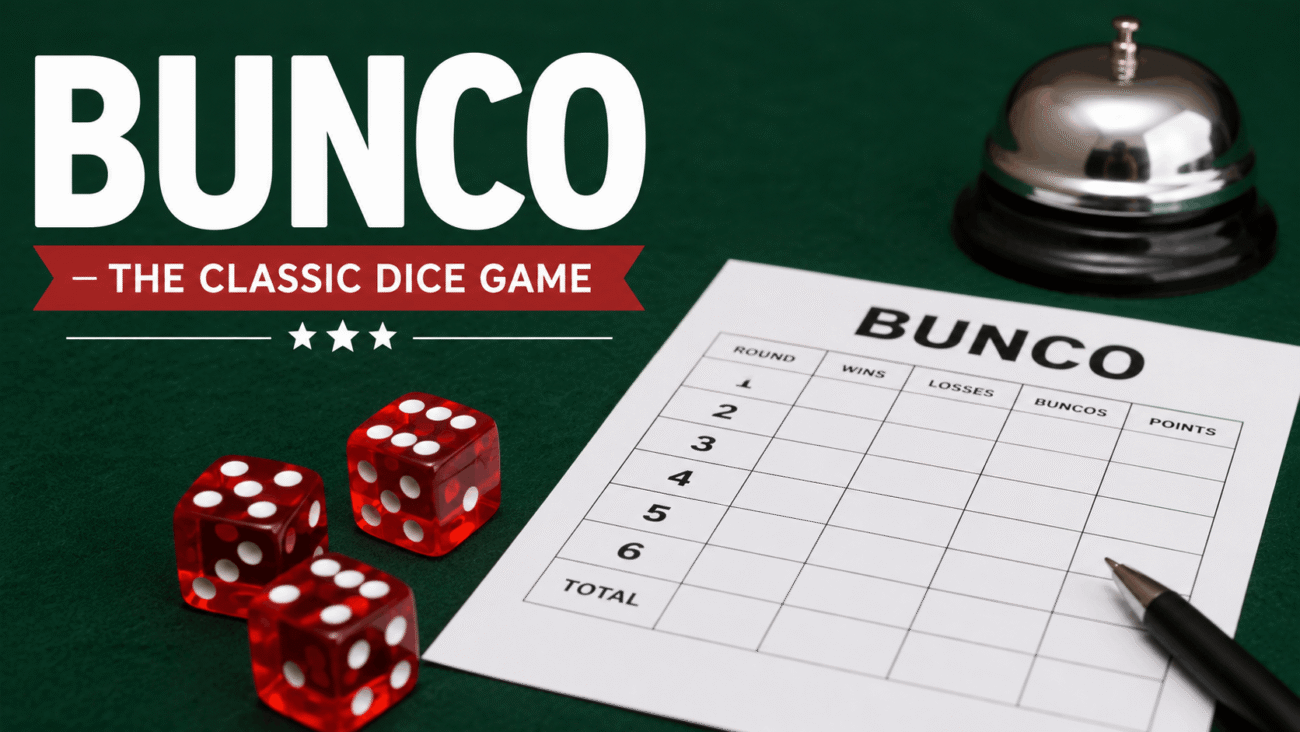
Some games are all about strategy. Others depend on quick thinking or trivia knowledge. The bunco game is different. It’s simple, fast-paced, and built around rolling dice, making it one of the easiest games to learn for players of all ages.
If you’ve been invited to a Bunco night or you’re thinking about hosting one yourself, you don’t need to worry about memorizing complicated rules. Most new players understand the basics after just a few rounds, and before long, they’re laughing, cheering, and hoping for that perfect roll.
The game’s social nature is one of its biggest strengths. Winning is exciting, but spending time with friends, family, or neighbors is often the real reason people keep coming back.
Whether you’re planning a monthly game night or simply curious about how Bunco works, this guide will walk you through everything you need to know.
What Is a Bunco Game?
Bunco is a dice game that’s usually played with 12 people, although smaller groups can easily adapt the rules.
Players sit at tables of four and take turns rolling three dice while trying to match the current round number. Each successful roll earns points, and players continue rolling until they no longer score.
At the end of each round, players switch tables and teammates, creating a lively, social atmosphere where everyone gets to interact throughout the evening.
Unlike many traditional board games, Bunco doesn’t require deep strategy. Luck plays the biggest role, which keeps experienced and first-time players on equal footing.
That’s one reason it’s become a favorite for family gatherings, neighborhood parties, church groups, and community events across the United States.
Why So Many People Enjoy Bunco
The appeal of Bunco goes beyond the game itself.
Since players regularly change seats and teammates, conversations naturally happen throughout the evening. It’s one of the few games where meeting new people is part of the experience.
Another advantage is that games move quickly.
Each round usually lasts only a few minutes before players rotate and begin again. That constant movement keeps the energy high and prevents long periods of waiting.
Many hosts also turn Bunco nights into potluck dinners or themed parties, making the event about much more than rolling dice.
What You’ll Need Before You Start
One reason Bunco has remained popular is its simplicity.
Most games require only a few basic supplies.
Three Dice
Every table needs a set of three standard six-sided dice.
Since several tables usually play at the same time, having multiple dice sets keeps the game moving without interruptions.
Score Sheets
Each player keeps track of points throughout the game.
Printable scorecards are widely available, although many hosts create their own customized versions for themed events.
Bell or Noise Maker
At the head table, a bell signals the end of each round.
Once the winning team rings the bell, everyone finishes their current turn before moving to the next round.
Pencils or Pens
Every player needs something to record points after each round.
Having extra pencils on hand is always a good idea in case someone forgets to bring one.
Small Prizes
While completely optional, prizes add another layer of excitement.
Many Bunco hosts award small gifts for categories such as:
- Most wins
- Most losses
- Most Buncos
- Highest score
- Lowest score
- Best sportsmanship
These prizes help keep everyone involved, regardless of where they finish.
How a Typical Bunco Night Works
Although every group develops its own traditions, most Bunco nights follow a similar format.
Players arrive, choose seats, and receive scorecards.
After a brief explanation of the rules, everyone begins Round One.
As players earn points and complete rounds, winning teams move to different tables while others rotate according to the group’s chosen format.
The process repeats until all six rounds have been completed, after which final scores are calculated and prizes are awarded.
Even players who don’t win often leave looking forward to the next gathering because the social atmosphere is just as enjoyable as the competition.
Who Should Play Bunco?
One of Bunco’s greatest strengths is its accessibility.
The game works well for:
- Families with older children
- Neighborhood gatherings
- Church and community groups
- Retirement communities
- Couples’ game nights
- Holiday parties
- Charity fundraising events
- Office social gatherings
Because success depends mostly on luck rather than experience, newcomers never feel intimidated.
Everyone has an equal chance of rolling well, which keeps the competition friendly and lighthearted.
Benefits of Playing Bunco
Beyond simple entertainment, Bunco offers several practical benefits.
It encourages face-to-face interaction at a time when much of our communication happens online.
Players also enjoy a relaxed environment where conversations continue naturally between rounds.
For families, Bunco provides an easy way to bring multiple generations together since the rules are straightforward enough for both younger and older players.
Perhaps most importantly, it reminds people that game night doesn’t always require complicated strategies or expensive equipment to be memorable.
Is Bunco Right for Your Group?
Before organizing your first game night, think about the personalities in your group.
If everyone enjoys highly competitive strategy games, Bunco’s reliance on luck may feel different at first.
On the other hand, if your goal is laughter, conversation, and an easy-to-learn activity that welcomes beginners, Bunco is difficult to beat.
Its simple setup, fast pace, and constant player interaction explain why the game has remained popular for decades.
Bunco Game Rules Explained
The biggest reason Bunco remains a favorite at parties is that the rules are easy to learn. Most first-time players understand the flow after one or two rounds.
A standard Bunco game consists of six rounds. During each round, players try to roll the number that matches the current round. For example, during Round 1, you’re hoping to roll as many ones as possible. In Round 2, twos become the target, and the pattern continues until Round 6.
How Scoring Works
Every player rolls three dice during their turn.
Here’s the basic scoring system used by most groups:
- One point for each die that matches the current round number.
- Five points for rolling three of a kind that doesn’t match the round number.
- Twenty-one points for rolling three of the current round number, known as a Bunco.
If you score points, your turn continues. If you don’t score, the dice pass to the next player.
The round ends when the head table reaches the agreed score, usually 21, and rings the bell.
Winning the Game
Once all six rounds are complete, players total their scores.
Many Bunco groups recognize several winners rather than only one overall champion. Common prize categories include:
- Most wins
- Most losses
- Most Buncos
- Highest overall score
- Lowest overall score
This approach keeps everyone involved because even players who don’t win many rounds still have opportunities to earn prizes.
What’s Included in a Bunco Game Set?
If you’re planning to host regularly, purchasing a bunco game set can save time and make setup much easier.
Most complete sets include:
- Three dice for each table
- Score sheets
- Table number cards
- Bell
- Tally sheets
- Rule booklet
- Travel or storage bag
Some premium sets also include themed decorations, reusable scorecards, pencils, and prize ribbons.
If you only host occasionally, you don’t necessarily need a commercial set. Three dice, printable score sheets, and a simple bell are enough to enjoy a full Bunco night.
Can You Play a Bunco Game Online?
Yes. Although Bunco is traditionally played around a table, many groups now enjoy a bunco game online, especially when friends and family live in different cities.
Online play usually works in one of two ways.
The first option uses dedicated Bunco apps or browser-based versions that handle scoring automatically.
The second option is surprisingly simple. Players connect through a video call while each participant rolls their own dice at home. One person keeps score, and the group follows the same rotation and scoring rules used during an in-person game.
While the online version doesn’t completely replace gathering around the same table, it’s an enjoyable way to stay connected when meeting in person isn’t possible.
Traditional Bunco vs. Online Bunco
| Feature | Traditional Bunco | Online Bunco |
|---|---|---|
| Social interaction | Excellent | Good through video chat |
| Setup time | Moderate | Quick |
| Physical dice | Yes | Optional |
| Automatic scoring | No | Often available |
| Best for | Parties and family gatherings | Long-distance friends and relatives |
Both formats offer the same basic gameplay. The biggest difference is the social atmosphere.
Tips for Hosting a Great Bunco Night
Hosting Bunco doesn’t require much experience, but a little preparation makes a noticeable difference.
Prepare the tables before guests arrive. Having scorecards, dice, pencils, and table numbers ready allows everyone to start playing almost immediately.
Explain the rules before the first round rather than answering the same questions throughout the evening.
If several players are new, consider playing one practice round without keeping score. This helps everyone feel comfortable before the real game begins.
Small snacks and drinks also help create a relaxed atmosphere without distracting from the game.
Finally, keep the focus on fun rather than competition. Bunco works best when people laugh together, celebrate lucky rolls, and enjoy the evening regardless of who wins.
Common Mistakes New Bunco Players Make
One of the most common mistakes is forgetting which round is currently being played.
Since the target number changes every round, it’s easy for beginners to celebrate the wrong roll. A quick reminder from the table captain usually solves the problem.
Another mistake is adding scores incorrectly.
Taking a few extra seconds to update score sheets after each round helps avoid confusion later.
Some hosts also try to change too many rules during the first game.
It’s usually better to stick with the traditional format until everyone understands the basics. Once the group becomes familiar with the game, adding house rules becomes much easier.
Lastly, don’t worry too much about winning.
Because luck plays such a large role in Bunco, every player has a chance to finish at the top. That’s part of what makes the game so enjoyable.
FAQs About Bunco Game
How many people do you need to play Bunco?
A traditional Bunco game is designed for 12 players, divided into three tables of four. However, the game is flexible. Groups of 8, 16, or even smaller numbers can play by adjusting the table setup and rotation. The goal is to keep the teams balanced so everyone gets a chance to rotate and play with different partners.
How long does a Bunco game last?
Most Bunco nights last between one and two hours, depending on the number of players and how quickly each round moves. If you’re hosting a social gathering with food, conversation, or prize giveaways, the event may naturally last a bit longer.
Do you need a Bunco game set to play?
No. A bunco game set makes organizing the game easier, but it isn’t required. Three dice, score sheets, pencils, and a bell are enough to play a complete game. Many hosts print free scorecards and use household items instead of buying a commercial set.
Can Bunco be played online?
Yes. A bunco game online is a great option for friends and family who can’t meet in person. Players can connect through video conferencing software while rolling their own dice at home or use online versions that keep score automatically. Although the atmosphere is different from an in-person gathering, the rules remain largely the same.
Is Bunco based on skill or luck?
Bunco is primarily a game of chance. Since the outcome depends on rolling dice, every player has an equal opportunity to win regardless of age or experience. That’s one of the reasons it’s so popular for mixed groups and family game nights.
Final Thoughts
The bunco game has remained a favorite for decades because it offers something many modern games don’t—simple rules, quick rounds, and plenty of opportunities to socialize. You don’t need advanced strategy or years of experience to enjoy it. All you need is a few friends, three dice, and a willingness to have fun.
Whether you’re hosting your first Bunco night or joining an established group, learning the bunco game rules takes very little time. Once everyone understands the basics, the focus naturally shifts from learning the game to enjoying the company around the table.
If you’re planning to host regularly, investing in a bunco game set can make setup easier and help keep everything organized. On the other hand, if your group is spread across different locations, trying a bunco game online is an easy way to stay connected and keep the tradition alive.
At its heart, Bunco isn’t just about keeping score. It’s about laughter, conversation, friendly competition, and creating memories that bring people back month after month. That’s why, despite the rise of digital entertainment, this classic dice game continues to be a favorite at family gatherings, neighborhood parties, and community events across the country.
