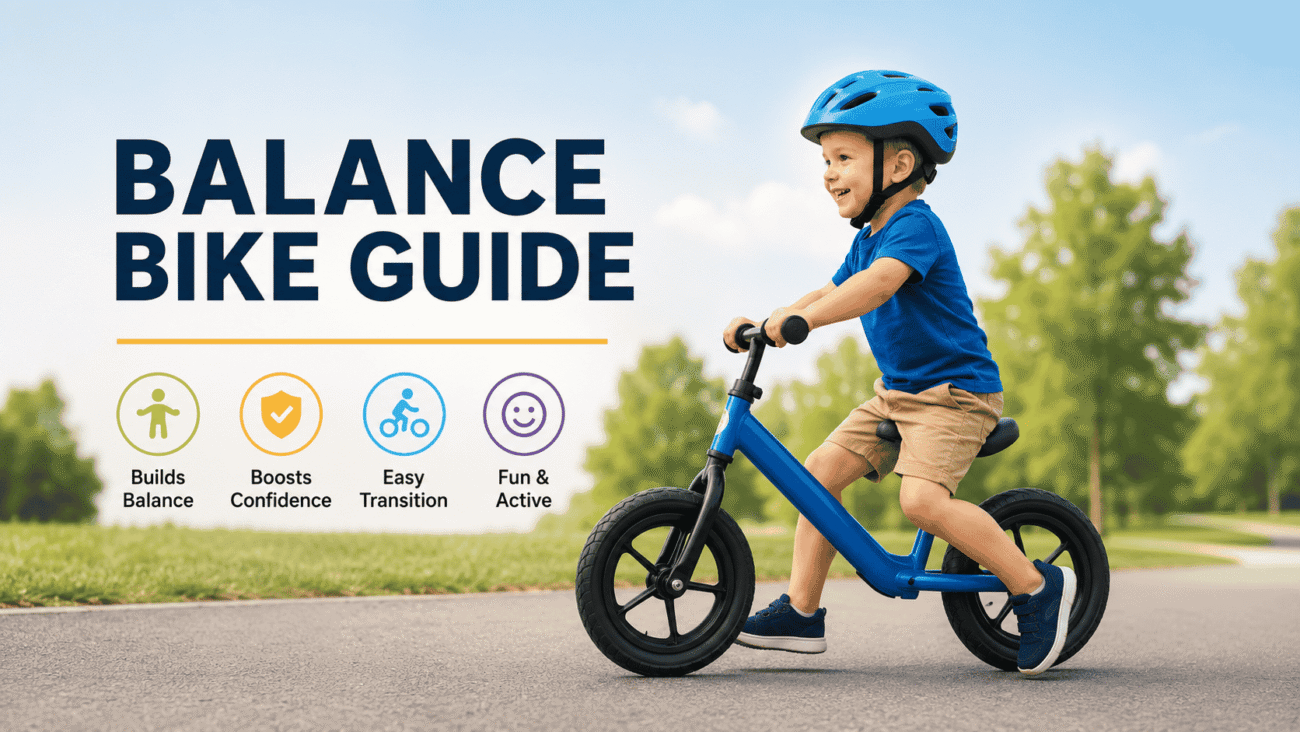
Learning to ride a bike is a milestone that many families look forward to. While training wheels were once the standard, many parents now start with a balance bike because it helps children develop balance and coordination before they ever touch a pedal.
If you’re shopping for your child’s first bike, a balance bike is often the simplest and most effective option. It encourages confidence, lets kids control their own speed with their feet, and makes the transition to a pedal bike much smoother.
In this guide, you’ll learn how balance bikes work, why they’re so popular, what to look for when buying one, how a Strider balance bike compares with other options, whether you need a balance bike for a 2 year old, and what to know about a Guardian balance bike before making your decision.
What Is a Balance Bike?
A balance bike is a small bicycle without pedals. Instead of pedaling, children push themselves forward with their feet while learning to balance naturally.
As they become more comfortable, they begin lifting their feet for short moments and eventually glide without assistance. This process teaches the most challenging part of cycling—balance—before introducing pedaling.
Because children learn one skill at a time, many move to a traditional bicycle more quickly than those who begin with training wheels.
How Does a Balance Bike Work?
The concept is surprisingly simple.
A child sits on the saddle, grips the handlebars, and walks the bike forward using both feet. As confidence grows, walking turns into running, and running gradually becomes gliding.
Since there’s no need to think about pedals, young riders can focus entirely on steering and maintaining balance.
This natural learning process often feels more like play than practice.
Why Parents Choose Balance Bikes
Balance bikes have become increasingly popular because they encourage independent learning without adding unnecessary complexity.
They Teach Balance First
Traditional bikes require children to learn balancing, steering, pedaling, and braking all at once.
A balance bike removes pedaling from the equation, allowing children to master balance before introducing other cycling skills.
They Build Confidence
Because children’s feet remain close to the ground, they usually feel safer exploring at their own pace.
If they lose balance, they simply place their feet down rather than falling over.
That added sense of security often encourages more practice.
They Improve Coordination
Walking, gliding, steering, and balancing all work together to improve overall coordination.
These movement skills can benefit children in many other physical activities as well.
They Make the Transition Easier
Many children who spend time on a balance bike need very little practice before riding a pedal bike without training wheels.
Parents are often surprised by how quickly this transition happens.
When Should a Child Start Using a Balance Bike?
Every child develops differently, but many are ready once they can walk confidently and follow simple directions.
Some children begin earlier, while others prefer waiting until they’re slightly older.
Instead of focusing only on age, pay attention to:
- Confidence while walking
- Interest in riding
- Ability to sit comfortably on the bike
- Willingness to explore independently
These factors often matter more than birthdays.
Choosing a Balance Bike for a 2 Year Old
Finding the right balance bike for a 2 year old involves more than selecting the smallest model.
Young riders benefit from bikes that feel light, stable, and easy to control.
Look for features such as:
- Lightweight frame
- Adjustable seat
- Adjustable handlebars
- Comfortable grips
- Quality tires
- Easy-to-reach seat height
When seated, your child’s feet should rest flat on the ground with knees slightly bent.
This position allows them to push confidently while maintaining control.
Important Features to Consider
Not every balance bike offers the same experience.
Understanding the main features makes comparing models much easier.
Frame Material
Most balance bikes use either steel, aluminum, or wood.
Steel frames are durable but often heavier.
Aluminum frames reduce weight, making them easier for young children to maneuver.
Wooden bikes have a classic appearance but may offer fewer adjustment options.
Adjustable Seat
Children grow quickly.
An adjustable saddle extends the useful life of the bike by allowing it to grow alongside your child.
Tires
Balance bikes typically come with either foam tires or inflatable air tires.
Foam tires require little maintenance and can’t go flat.
Air-filled tires generally provide a smoother ride on uneven surfaces.
Weight
Lighter bikes are easier for young riders to control.
Parents also appreciate lighter bikes when it’s time to carry them home after a long outing.
Strider Balance Bike
One of the most recognized names in this category is the Strider balance bike.
Strider has become popular among parents because its bikes are lightweight, adjustable, and designed specifically for young beginners.
Many families appreciate the simple design, low seat height, and the ability to adjust the bike as children grow.
When comparing a Strider balance bike with other brands, look beyond the brand name and consider frame weight, adjustability, tire type, replacement parts, and overall comfort.
Guardian Balance Bike
Parents may also come across the Guardian balance bike while researching options.
Guardian is known for emphasizing rider safety and child-friendly bicycle designs.
When evaluating a Guardian balance bike, pay attention to features such as frame geometry, seat adjustment range, weight, braking system (if included), and the recommended rider height.
Rather than choosing a bike based solely on brand recognition, focus on finding the model that best matches your child’s size, confidence level, and riding environment.
Comparing Popular Balance Bike Features
| Feature | Lightweight Model | Standard Model |
|---|---|---|
| Easy to carry | Excellent | Good |
| Beginner friendly | Excellent | Very Good |
| Adjustable seat | Usually included | Usually included |
| Foam tires | Often available | Available |
| Air tires | Available | Common |
| Suitable for longer use | Yes | Yes |
The best bike isn’t necessarily the most expensive one. A model that fits your child properly and encourages regular practice will usually provide the greatest value.
How to Choose the Best Balance Bike
Choosing the right balance bike isn’t about buying the most expensive model. It’s about finding one that fits your child comfortably and encourages them to ride with confidence.
A well-fitted bike can make learning fun, while one that’s too large or too heavy may discourage a child from using it.
Measure Your Child Before Buying
Before shopping, measure your child’s inseam rather than relying only on age recommendations.
The saddle should be low enough that your child can place both feet flat on the ground while sitting comfortably.
This simple check makes balancing much easier.
Think About Where They’ll Ride
The riding surface plays a big role in choosing the right tires.
If your child will mostly ride on sidewalks or driveways, foam tires can work well because they require almost no maintenance.
For parks, gravel paths, or uneven surfaces, air-filled tires often provide a smoother and more comfortable ride.
Consider Long-Term Adjustability
Children grow quickly.
A bike with an adjustable seat and handlebars will usually last longer and continue fitting properly as your child gets taller.
Safety Tips for Young Riders
Even though balance bikes are designed for beginners, safety should always come first.
Teaching good habits early helps children become more confident riders as they grow.
Always Wear a Helmet
A properly fitted helmet is one of the most important pieces of safety equipment.
Make wearing a helmet part of every ride, even if your child is only riding in the driveway.
Choose Safe Riding Areas
Flat, open spaces are ideal for beginners.
Good places include:
- Empty parking lots
- Neighborhood sidewalks
- Parks
- Paved walking paths
- Quiet cul-de-sacs
Avoid steep hills or busy streets until your child has developed better control.
Stay Close During Practice
Young riders gain confidence knowing a parent or caregiver is nearby.
Instead of constantly holding the bike, allow your child to practice independently while staying close enough to help if needed.
Common Mistakes Parents Make
Learning to ride should feel enjoyable rather than stressful.
These common mistakes can slow a child’s progress.
Buying a Bike That’s Too Large
Many parents purchase a larger bike hoping their child will “grow into it.”
Unfortunately, oversized bikes are often harder to balance and control.
Choosing the correct size leads to faster learning and greater confidence.
Expecting Immediate Results
Some children begin gliding within minutes.
Others need several weeks of short practice sessions.
Every child develops at their own pace, and comparing progress with others rarely helps.
Practicing Too Long
Young children often learn better through short, fun sessions.
Stopping while they’re still enjoying themselves makes them more excited to ride again the next day.
Ignoring Comfort
If the seat is too high or the handlebars feel awkward, children may lose interest quickly.
A few small adjustments can completely change their riding experience.
Keeping a Balance Bike in Good Condition
Balance bikes require very little maintenance, but regular care helps them last longer.
Simple tasks include:
- Wiping away dirt after rides
- Checking tire condition
- Tightening loose bolts
- Adjusting the seat as your child grows
- Inspecting grips and handlebars
If the bike has air-filled tires, check the tire pressure occasionally according to the manufacturer’s recommendations.
Pros and Cons of Balance Bikes
| Pros | Cons |
|---|---|
| Helps children learn balance naturally | No pedals for practicing pedaling skills |
| Builds confidence | Children eventually outgrow the bike |
| Lightweight and easy to control | Premium models can cost more |
| Makes transition to pedal bikes easier | Some models require occasional adjustments |
| Encourages outdoor activity | Tire type affects where it performs best |
For most families, the benefits far outweigh the drawbacks, especially during the early stages of learning to ride.
Expert Tips for Parents
Parents often ask what makes the biggest difference when teaching a child to ride.
In many cases, it’s surprisingly simple.
Let Children Learn at Their Own Speed
Avoid pushing your child before they’re ready.
When learning feels like play instead of a lesson, progress often happens naturally.
Celebrate Small Improvements
Gliding for a few extra seconds or steering around a gentle turn is real progress.
Recognizing these small achievements helps build confidence.
Ride Together
Children love copying adults.
Family walks, bike rides, or visits to local parks often encourage children to spend more time practicing.
Focus on Fun Rather Than Distance
A five-minute ride filled with smiles is often more valuable than a long practice session that leaves a child frustrated.
Positive experiences help create lifelong interest in cycling.
Is a Balance Bike Worth Buying?
For many families, absolutely.
A balance bike gives children an opportunity to develop coordination, confidence, and independence while enjoying outdoor play.
Whether you’re comparing a Strider balance bike, considering a Guardian balance bike, or searching for the ideal balance bike for a 2 year old, choosing the right size and encouraging regular practice will have a greater impact than selecting the most expensive model.
A child who feels comfortable and confident on their first bike is often eager to continue riding as they grow.
FAQs
What age is best for a balance bike?
Many children begin using a balance bike between 18 months and 5 years old, depending on their height, coordination, and confidence. Instead of choosing by age alone, check that your child can sit on the seat with both feet flat on the ground.
Is a Strider balance bike worth buying?
A Strider balance bike is a popular choice because of its lightweight frame, adjustable design, and beginner-friendly features. Before buying, compare the bike’s weight, seat height range, tire type, and recommended rider size to make sure it’s the best fit for your child.
Is a balance bike good for a 2 year old?
Yes. A balance bike for a 2 year old can be an excellent way to introduce cycling. Look for a lightweight model with a low seat height so your child can push off the ground comfortably and build confidence at their own pace.
What is a Guardian balance bike?
A Guardian balance bike is designed with young riders in mind and focuses on comfort, stability, and child-friendly geometry. When comparing models, consider features such as adjustability, overall weight, tire type, and the manufacturer’s recommended rider height.
Do children still need training wheels after using a balance bike?
Many children who spend enough time on a balance bike transition directly to a pedal bike without using training wheels. Because they’ve already learned balance and steering, they often only need to learn how to pedal.
Conclusion
A balance bike is one of the best investments you can make when introducing a young child to cycling. By focusing on balance first, it helps children build confidence, coordination, and control in a natural and enjoyable way.
Whether you’re looking for a balance bike for a 2 year old, comparing a Strider balance bike, or researching a Guardian balance bike, the most important factors are proper fit, lightweight construction, and a design that matches your child’s size and riding ability.
Take time to measure your child’s inseam, choose a bike with room for adjustment, and encourage short, fun practice sessions. Every child learns at a different pace, and confidence grows with regular riding rather than long training sessions.
With the right bike and a little patience, you’ll be giving your child the skills they need to transition smoothly to a pedal bike and enjoy cycling for years to come.
