
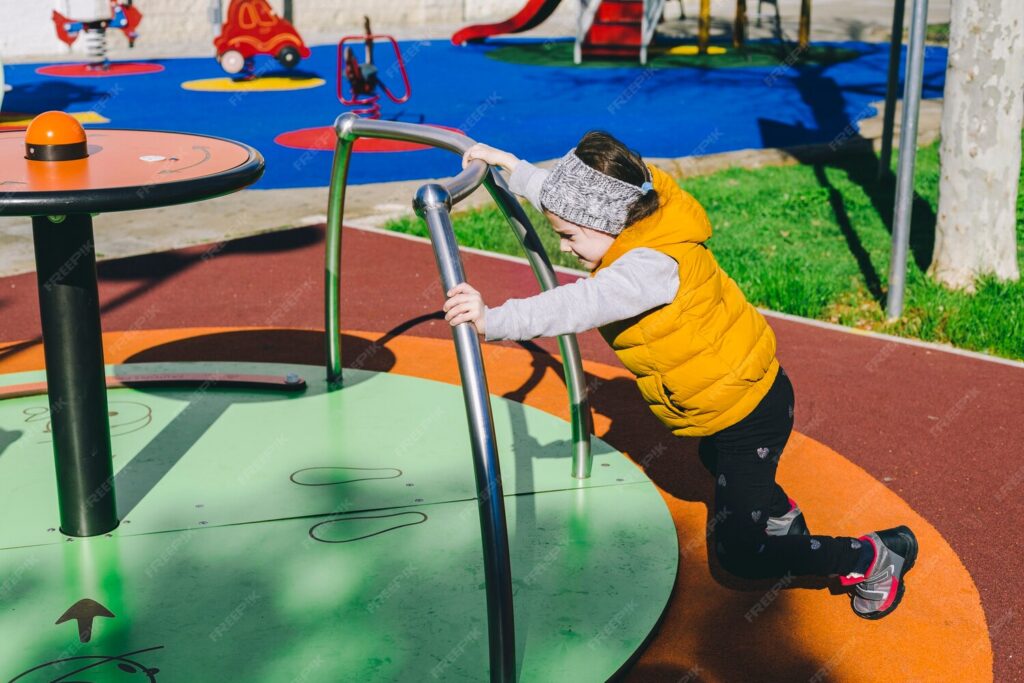
Playgrounds are vital for a child’s development, helping them build motor skills, social skills, and physical strength. However, ensuring safety is crucial to prevent injuries from falls or equipment issues. A well-designed play area balances acceptable risks with key safety feature, allowing children to test their limits in a secure environment without unnecessary hazards.
Choosing the Right Surface Material
The ground beneath the play equipment is arguably the most critical safety feature of any playground. Most severe injuries occur from falls, making impact-absorbing surfaces an absolute requirement.
Rubber Mulch
Rubber mulch provides excellent shock absorption and requires less frequent topping off compared to natural materials. Made from recycled tires, it resists compacting over time and drains water efficiently. This material helps cushion falls from significant heights, making it a popular choice for high-traffic play zones.
Pour-in-Place Surfaces
Pour-in-place rubber surfacing offers a seamless, accessible option for inclusive playgrounds. This unified surface allows wheelchairs and strollers to roll smoothly. It provides consistent shock absorption across the entire play area and can be customized with bright colors and patterns to enhance the playground’s aesthetic appeal.
Engineered Wood Chips
Engineered wood fiber is a cost-effective and natural-looking option. Unlike standard landscaping mulch, these wood chips are specifically designed to knit together, providing a springy surface that absorbs impact. They do require regular raking and periodic replacement to maintain the required depth for optimal safety.
Setting Strict Equipment Standards
Playground equipment must be built to withstand heavy use and harsh weather while keeping kids safe. Using non-toxic materials is non-negotiable. Paints and plastics must be free of lead and harmful chemicals to protect children who might touch or put their mouths on the equipment.
Additionally, all structures should feature rounded edges and capped hardware. Sharp corners and exposed bolts can catch clothing or cause severe cuts. Guardrails and protective barriers should surround elevated platforms to prevent accidental falls, and spacing between bars must be carefully measured to prevent head or neck entrapment.
Creating Age-Appropriate Zones
A two-year-old taking their first steps has vastly different physical capabilities than a ten-year-old running at full speed. Designing a safe playground means separating play areas based on age groups.
Dedicated toddler zones should feature smaller steps, lower platforms, and gentle slides. These areas keep younger children safe from the fast-paced play of older kids. Meanwhile, structures designed for children aged five to twelve can include taller climbing walls and more complex monkey bars. Fencing or landscaping can be used to naturally separate these zones, reducing the chance of collisions.
Establishing Proper Maintenance Routines
Even the best-designed playground will become unsafe without regular maintenance. Weather conditions, vandalism, and daily wear and tear can quickly compromise equipment integrity.
Implementing a daily inspection checklist helps identify immediate hazards. Staff or maintenance crews should look for broken glass, trash, damaged surface materials, and loose hardware. Finding and addressing these issues promptly prevents accidents before they happen.
Seasonal upkeep is equally important. Before the heavy use of summer begins, playgrounds should undergo deep inspections. This includes checking for rust on metal parts, splintering on wooden structures, and ensuring surface materials meet depth requirements.
The Value of Professional Installation
Designing a playground on paper is entirely different from bringing it to life. Proper installation ensures that safety feature are met from the ground up. Small miscalculations in spacing or footing depth can lead to structural failures down the line.
Working with experienced professionals guarantees that the playground complies with local safety feature and national standards. For example, selecting reputable playground installers in Montana ensures that the equipment is securely anchored to handle the region’s specific soil types and severe weather shifts. Experts know exactly how to assemble complex structures safely, providing peace of mind to parents and community leaders alike.
Conclusion
A safe playground is a community asset that brings families together. By prioritizing impact-absorbing surfaces, strict equipment standards, age-appropriate design, and consistent maintenance, you create an environment where children can thrive.