
This is a factor that impacts the entire logistics industry in the UK. The HGV traction services are particularly affected compared to other companies. The demand can escalate rapidly during some months.
Companies providing traction services must be flexible and reliable at all times, especially when managing hgv traction work for various logistics partners. They provide services to hauliers, retailers, and manufacturers in the UK. Delays and losses can occur during seasonal peaks if proper planning is not done. Effective traction services plan ahead of time before the peak in demand.
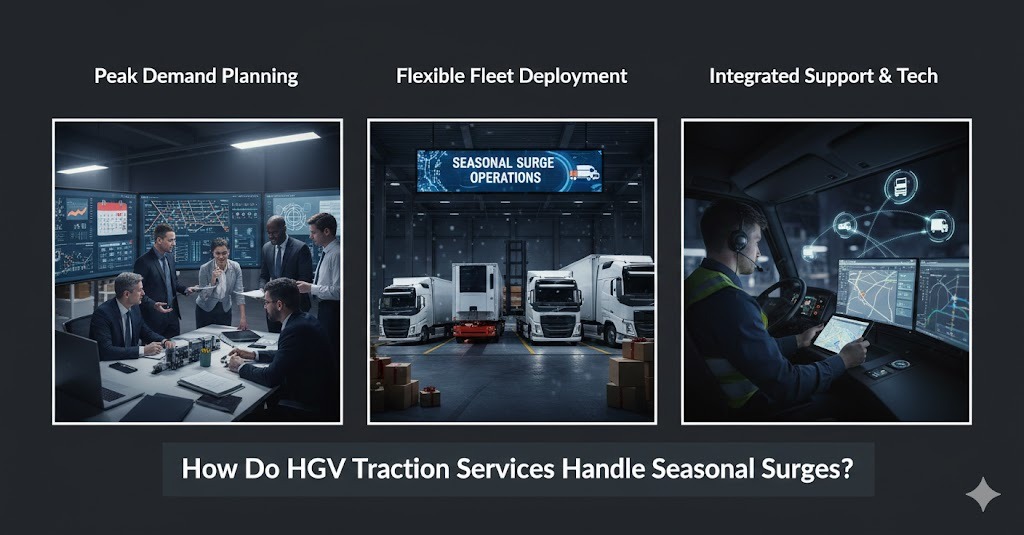
This article discusses how they deal with peak hours. It is based on planning, people, vehicles, and technology. The aim is to provide a constant service level even during peak hours.
What Are Seasonal Surges in HGV Traction?
Seasonal peaks are periods of increased transport demand. They can follow predictable patterns throughout the year. Some peaks are due to retail cycles. Others are due to weather or industry deadlines.
In the UK, Christmas is the biggest peak. There are massive sales of goods in late autumn and winter. Supermarkets also place large orders during holidays. Easter and summer sales are smaller peaks.
Agriculture also provides a strong seasonal demand. Harvest times require rapid and reliable transport. Construction surge demands occur during warmer months. Weather can suddenly alter demand. Traction services require rapid response to these demands. Unreliability can upset entire supply chains.
Early Planning Is the First Defence
The planning takes place several months before the peak period. The traction companies analyze data from previous years. They look at the volumes, routes, and behavior of the customers. This enables them to predict the likely increase in demand.
Resource utilization becomes better. Additional drivers can be hired in advance. Availability of vehicles can be checked in advance. Maintenance schedules are adjusted to avoid vehicle downtime. Customers are also communicated with in advance. Volumes can be discussed openly. There are no last-minute surprises due to proper communication.
Flexible Driver Management Is Essential
Drivers are the backbone of the traction services. Seasonal peaks mean additional driving hours. Legal maximums remain operational at all times. Adherence remains non-negotiable. Operators adopt flexible staffing arrangements. This includes contract drivers and short-term agreements. Most drivers choose to work seasonally. This provides additional income during peak periods.
Training is done before the peak season begins. Drivers are trained on routes and customer regulations. This minimizes mistakes when under pressure. Well-trained drivers operate with more confidence. The welfare of drivers is also important. The risk of fatigue increases during peak periods. Time taken for rest is closely monitored. Safe drivers translate to safe services.
Fleet Availability Must Be Carefully Managed
The demand for vehicles increases during peak seasons. The traction suppliers have to make sure that sufficient vehicles are available. Maintenance is planned before the peak seasons. Vehicle breakdowns during peak seasons are expensive. The traction suppliers keep reserve vehicles available wherever possible. This increases the reliability of the operations. Tyre checks and maintenance are given priority. Winter preparations are critical in the UK.
Some operators lease additional vehicles on a short-term basis. This helps avoid risks associated with long-term investment. The ability to adjust the fleet size according to demand is important. This also helps ensure that the quality of service is not affected. Clean and legal vehicles are essential to maintain reputation. Customers demand proper presentation at all times.
Strong Partnerships With Clients Help Stability
Good traction services work hand in hand with their clients. They are partners, not suppliers. This is important during surges. Clients share their forecasts and promotion plans. Traction teams adjust capacity based on this. There are no misunderstandings. Trust leads to faster response.
Service level agreements are used to guide peak operations. They establish priorities and escalation procedures. This makes it easier during stressful times. Issues are resolved quicker. Long-term relationships are mutually beneficial. They make for smoother transitions during the seasons.
Technology Plays a Growing Role
Technology enables improved decision-making. Transport management systems monitor demand patterns. They assist in the allocation of drivers and vehicles. Real-time tracking enhances visibility. Delays can be resolved promptly. Customers get reliable information. This eliminates dissatisfaction during peak periods.
Digital compliance tools safeguard legal requirements. Driver hours are tracked automatically. This eliminates accidental violations. Safety remains safeguarded. Data analysis enhances future planning. Every peak season is a learning experience. Improved systems translate to improved results.
Contingency Planning Reduces Risk
Even the best plans can go wrong under pressure. Unexpected events still occur. Weather, illness, or breakdowns can be a disruption. Traction services develop contingency plans. Plans for backup drivers are made early. Alternative routes are developed. Spare vehicles are placed in strategic locations.
Communication plans are also developed. Clients are notified immediately if there are issues. Honesty fosters trust during times of disruption. Silence ruins relationships. Resilient companies bounce back from issues quickly. This is what makes great traction providers.
Seasonal Training and Briefings Matter
There is additional pressure during peak periods. Errors can occur when there is no preparation. Training can prevent this. Drivers are briefed on seasonal issues. They are taught about customer expectations. Rules of the site are updated. Safety messages are reinforced.
Office teams are also trained. They handle more calls. Decisions need to remain calm. Roles are clearer and cut confusion. Preparation boosts confidence in the business. Confident teams handle pressure better.
Financial Planning Supports Sustainability
There is an increase in costs during seasonal peaks. Fuel consumption increases significantly. Labor costs also increase. Effective traction services manage their budget effectively. They budget for cash flow before the peak periods. There are pricing structures based on seasonal demand.
Cost control is still relevant. Efficiency helps to maintain margins. Waste is eliminated wherever possible. Sustainable finances help to ensure good service. This is beneficial to both parties.
Learning After the Peak Is Critical
When the demand goes down, the review process starts. The performance is analyzed. What went right is identified. The areas where things went wrong are analyzed honestly. The root causes are discussed. Improvements are planned for the next season.
Feedback from drivers is gathered. Customer feedback is carefully analyzed. Both views are important. Continuous improvement helps with future response. Every season improves capacity.
Why Seasonal Readiness Defines Quality
Seasonal peaks help distinguish quality from poor providers. Just about anyone can handle the off-peak business, but peak performance is where the best really prove themselves. Good traction services, such as those managed by transit fleets, plan ahead by investing in their people and processes. For logistics in the UK, there will be a continued trend of seasonal demand.
The retail cycles will not slow down. The weather will remain unpredictable. Having prepared traction services ensures that the supply chain remains in motion. This is because they protect customers, drivers, and reputation. Seasonal preparedness is not an option.