
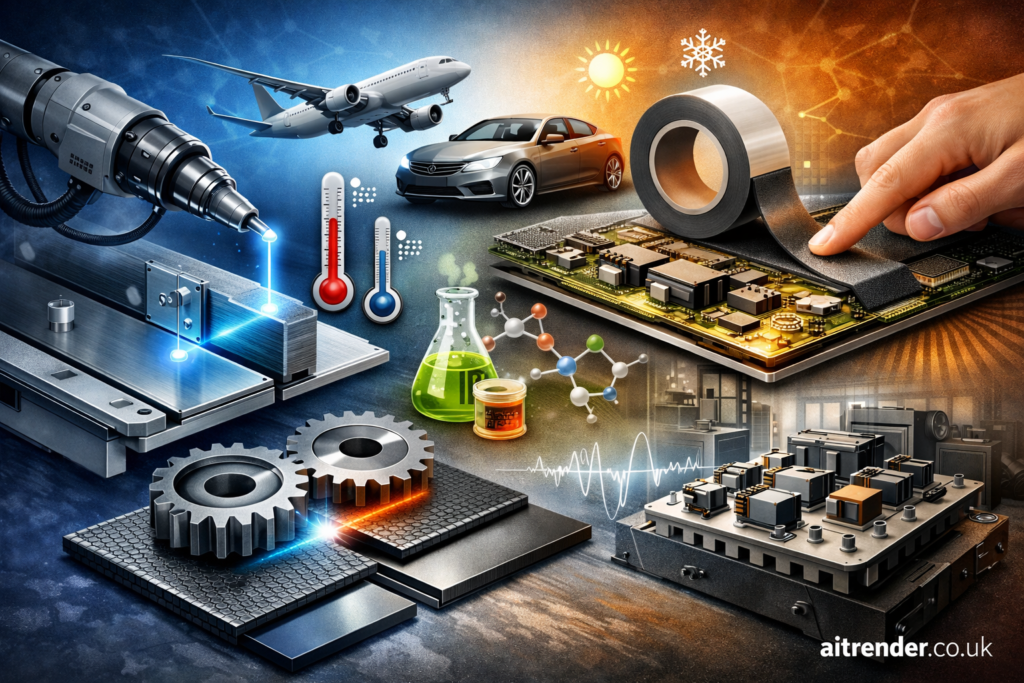
When you pick up your smartphone, drive your car, or even apply a bandage to a scrape, you likely aren’t thinking about the science that keeps these items intact. We tend to focus on the primary materials: the sleek glass of a screen, the sturdy metal of a car chassis, or the breathable fabric of a medical dressing. Yet, without reliable bonding technologies, many of the modern conveniences we rely on would be bulky, fragile, or simply impossible to manufacture.
Reliable bonding is the silent backbone of product design. It goes beyond simple glue; it involves sophisticated engineering that accounts for stress, temperature changes, and chemical exposure. From structural adhesives that replace heavy mechanical fasteners to pressure-sensitive tapes that dampen vibration, bonding agents are working tirelessly behind the scenes.
Here is how reliable bonding supports the everyday consumer products that shape our lives.
1. Enabling Sleek and Durable Electronics
The most obvious example of bonding innovation sits right in your pocket. Modern smartphones and tablets are feats of engineering, packing incredible processing power into incredibly thin frames. This sleekness is largely achieved by eliminating bulky screws and mechanical fasteners in favor of industrial-strength adhesives.
Bonding agents in electronics do more than just hold parts together. They are often multi-functional, providing water resistance to protect delicate circuits from spills and acting as thermal interfaces to dissipate the heat generated by powerful processors. Without these specialized adhesives, our devices would be heavier, prone to overheating, and far less resistant to the drops and bumps of daily use.
2. Revolutionizing Automotive Safety and Efficiency
The automotive industry has undergone a quiet revolution regarding how vehicles are assembled. While welding and bolting are still used, structural bonding has become increasingly critical, particularly with the rise of electric vehicles (EVs).
Adhesives allow for the bonding of dissimilar materials, such as aluminum to steel or carbon fiber to metal. This capability is essential for “light-weighting”—the process of making cars lighter to improve fuel efficiency and extend the range of EV batteries. Furthermore, continuous bond lines distribute stress more evenly across the vehicle frame than spot welds or rivets, which actually increases structural rigidity and crash safety. A bonded car is not only lighter but often safer and quieter, as the adhesives help dampen road noise and vibrations.
3. Enhancing Comfort in Medical Wearables
In the healthcare sector, the reliability of a bond can be a matter of patient health and comfort. Medical devices, particularly wearable sensors and continuous glucose monitors, rely on skin-friendly adhesives that must stick securely for days or weeks without irritating.
These bonding solutions face a unique challenge: they must adhere to a biological surface that stretches, sweats, and sheds cells, yet they must also be removed painlessly. Advanced pressure-sensitive adhesives have been developed to meet these rigorous standards, ensuring that vital health data can be tracked accurately without compromising the patient’s quality of life. This reliability allows patients to shower, exercise, and sleep without fear of their device detaching.
4. Strengthening Home Appliances and Furniture
Look around your home, and you will see the influence of bonding technology in your furniture and appliances. In the kitchen, the seamless look of a modern refrigerator or dishwasher is often achieved through high-strength tapes and adhesives that eliminate the need for visible screws or rivets, which can rust over time.
In furniture manufacturing, bonding enables cleaner lines and new aesthetic possibilities. It also plays a functional role in noise reduction. For example, the panels on a washing machine are often bonded with specialized tapes that absorb the vibration of the spin cycle, keeping the appliance from rattling across the laundry room floor. This application ensures that the products we use daily are not only visually appealing but also pleasant to live with.
5. Streamlining the Manufacturing Supply Chain
The journey of a product from a concept sketch to a consumer’s hands involves a complex web of manufacturing steps. Reliable bonding simplifies this process. Using tapes and adhesives is often faster and less energy-intensive than drilling holes or welding metal, which speeds up production lines and reduces energy costs.
This efficiency relies on a robust supply chain. Manufacturers must source specific bonding agents tailored to their unique needs. For instance, a design engineer might need a specific tape that can withstand extreme cold for an outdoor sensor. To find the right solution, they often turn to a specializedpressure-sensitive adhesive tape manufacturer who can provide custom converted tapes that fit precise manufacturing specifications. These partnerships ensure that the final product maintains its integrity regardless of the environment it is used in.
6. Improving Packaging Security and Freshness
Finally, bonding plays a crucial role in the packaging of the goods we buy. The adhesive on a cereal box, the seal on a medical kit, or the tape on an shipping box all serve as the first line of defense for the product inside.
Reliable bonding in packaging ensures tamper evidence—showing clearly if a product has been opened—and maintains the freshness of perishable goods by creating an airtight seal. In an era where e-commerce is dominant, the reliability of the tape sealing a shipping carton ensures that purchases arrive intact, preventing loss and damage during transit.
While we may rarely give credit to the glues, tapes, and epoxies that hold our world together, their failure would be immediately noticeable. Reliable bonding allows for lighter cars, smarter phones, and safer medical devices. As material science advances, we can expect even more innovative uses for these essential, invisible components, further enhancing the durability and functionality of the products we use every day.