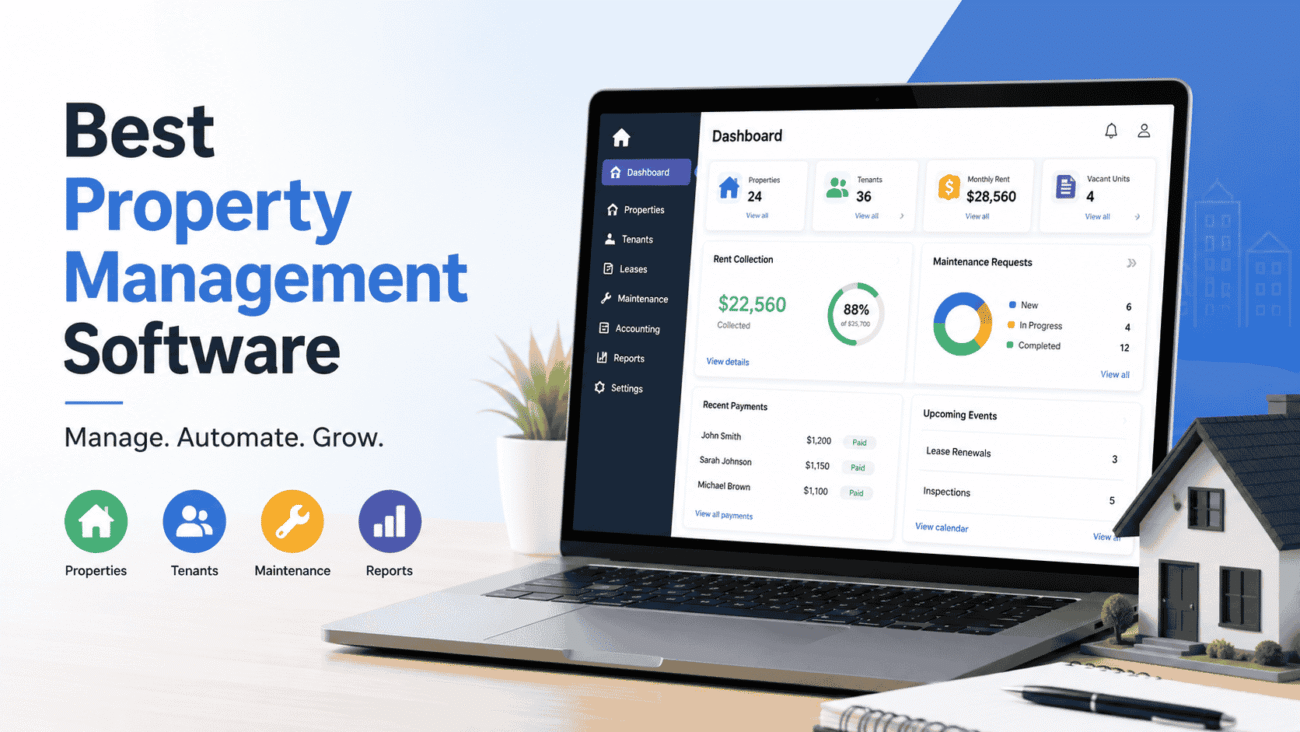
Managing rental properties has become much more than collecting rent every month. Today’s landlords and property managers handle tenant screening, maintenance requests, lease agreements, accounting, inspections, and communication across multiple properties. Trying to keep track of everything with spreadsheets or paper files can quickly become overwhelming. That’s why many professionals now rely on best property management software to simplify their daily work. The right platform can automate repetitive tasks, improve communication with tenants, and provide a clearer view of your business from a single dashboard.
Whether you manage one rental home or hundreds of units, this guide will help you understand what property management software does, which features matter most, and how to choose a solution that fits your needs.
What Is Property Management Software?
Property management software is a digital platform that helps landlords, real estate investors, and property management companies organize and automate rental operations.
Instead of using several different tools, one system can handle everything from tenant applications to financial reporting.
Most modern platforms include features for:
- Online rent collection
- Tenant communication
- Maintenance tracking
- Lease management
- Financial reporting
- Document storage
- Vacancy management
- Owner reporting
The goal is simple: reduce administrative work while making property management more efficient.
Who Uses Property Management Software?
These platforms are valuable for many types of users, including:
- Independent landlords
- Real estate investors
- Apartment managers
- Property management companies
- HOA managers
- Commercial property owners
Even landlords with only a few rental properties often save significant time by using dedicated software.
Why More Landlords Are Using Property Management Software
Rental management has become increasingly digital.
Tenants expect to pay rent online, submit maintenance requests through mobile apps, and receive quick responses to their questions.
Property management software helps landlords meet those expectations while staying organized.
Better Organization
Every lease, invoice, maintenance request, inspection report, and tenant conversation can be stored in one secure location.
This makes finding information much easier than searching through emails or paper files.
Faster Rent Collection
Many platforms allow tenants to pay rent online using secure payment methods.
Automatic reminders also reduce the number of late payments.
Easier Maintenance Tracking
Maintenance requests often create the biggest workload.
Software allows tenants to submit repair requests, upload photos, and monitor progress while managers assign work to contractors best property management software.
Features to Look for in the Best Property Management Software
Not every platform offers the same tools.
Before making a decision, focus on features that solve your biggest challenges.
Online Rent Payments
One of the most valuable features is secure online rent collection.
Benefits include:
- Automatic payment reminders
- Reduced paperwork
- Faster deposits
- Digital payment history
- Improved convenience for tenants
Tenant Screening
Many platforms integrate background checks, credit reports, rental history verification, and income screening.
This helps landlords make informed decisions before approving applicants.
Lease Management
Digital lease storage eliminates stacks of paperwork.
Many systems also send reminders before leases expire, making renewals easier to manage.
Accounting Tools
Financial reporting is essential for every rental business.
Quality software typically includes:
- Income tracking
- Expense tracking
- Tax reports
- Owner statements
- Budget reporting
- Export options for accountants
Keeping financial records organized simplifies tax preparation and business planning best property management software.
Cloud-Based vs Desktop Property Management Software
Today’s market offers two primary types of software.
| Feature | Cloud-Based Software | Desktop Software |
|---|---|---|
| Access Anywhere | Yes | Usually limited |
| Automatic Updates | Yes | Often manual |
| Mobile Access | Excellent | Limited |
| Data Backup | Usually automatic | User managed |
| Collaboration | Easy | More difficult |
For most landlords, cloud-based software provides greater flexibility because it can be accessed from almost any device with an internet connection.
next
Comparing the Best Property Management Software Features
Not every landlord manages the same type of property. A person with two single-family rentals has different needs than a company managing hundreds of apartment units.
Instead of focusing only on brand names, compare platforms based on the features that matter most.
| Feature | Why It Matters |
|---|---|
| Online Rent Collection | Makes payments faster and easier for tenants. |
| Tenant Screening | Helps reduce the risk of renting to unqualified applicants. |
| Maintenance Management | Keeps repair requests organized and trackable. |
| Accounting & Reporting | Simplifies bookkeeping and tax preparation. |
| Mobile App | Lets landlords and tenants manage tasks from anywhere. |
| Lease Management | Stores agreements digitally and tracks renewal dates. |
| Owner Portal | Useful for companies managing properties for multiple owners. |
| Document Storage | Keeps leases, inspections, and invoices organized. |
The best property management software isn’t always the one with the most features. It’s the one that solves your biggest day-to-day challenges.
How to Choose the Right Property Management Software
Choosing software becomes much easier when you focus on your own workflow rather than marketing claims.
Consider the Size of Your Portfolio
If you own a handful of rental homes, you may only need basic features such as rent collection and maintenance tracking.
Larger portfolios often benefit from advanced reporting, automation, owner portals, and team collaboration tools.
Think About Future Growth
Switching software later can be time-consuming.
Choosing a platform that can grow with your business often saves time and effort in the long run.
Look for Automation
Automation reduces repetitive work.
Many platforms automatically:
- Send rent reminders
- Notify tenants about lease renewals
- Generate monthly financial reports
- Track maintenance requests
- Send payment confirmations
Even small automations can save hours every month.
Check Customer Support
No software is perfect.
Reliable customer support becomes valuable when you need help during tax season, a system update, or an unexpected technical issue best property management software.
Common Mistakes When Choosing Property Management Software
Many buyers make decisions too quickly.
Avoiding these common mistakes can help you choose software you’ll still be happy with years from now.
Buying Based Only on Price
The least expensive platform isn’t always the best value.
Software that saves several hours every week may justify a slightly higher monthly subscription.
Ignoring the Mobile Experience
Many landlords manage properties while traveling.
A responsive mobile app makes it easier to approve maintenance requests, communicate with tenants, and monitor payments from anywhere.
Overlooking Security
Property management systems store sensitive information, including lease agreements, payment records, and personal tenant details.
Choose software that offers secure logins, encryption, and regular security updates.
Paying for Features You’ll Never Use
Enterprise-level platforms often include advanced tools designed for very large management companies.
Independent landlords may not need every premium feature.
Focus on software that matches your current needs while leaving room for future growth.
Pros and Cons of Property Management Software
Every platform has advantages and limitations.
| Pros | Cons |
|---|---|
| Saves time through automation | Monthly subscription costs |
| Simplifies rent collection | Learning curve for new users |
| Improves tenant communication | Internet connection required for cloud-based systems |
| Organizes maintenance requests | Some advanced features cost extra |
| Keeps financial records in one place | Data migration can take time |
For most landlords, the increase in efficiency outweighs the ongoing subscription cost.
Real-World Example
Imagine you own twelve rental properties across different neighborhoods.
Previously, rent payments arrived through checks, maintenance requests came by text message, and lease agreements were stored in multiple folders.
After switching to property management software, tenants pay rent online, maintenance requests are submitted through a portal, and lease documents are stored securely in one place. Monthly reports are generated automatically, making it easier to track income and expenses.
Instead of spending hours on administrative tasks each week, you have more time to focus on growing your rental business.
Expert Tips for Getting the Most From Property Management Software
Buying the software is only the first step. The real value comes from using its features consistently.
Set Up Your Properties Correctly
When adding your rentals, take time to enter accurate information, including unit numbers, lease dates, rent amounts, and tenant details.
A well-organized setup makes reporting and day-to-day management much easier.
Encourage Tenants to Use the Portal
Many tenants still prefer texting or emailing landlords.
Encouraging them to submit maintenance requests and make rent payments through the tenant portal creates a complete record of every interaction and helps keep everything organized.
Review Financial Reports Regularly
Most property management platforms generate reports automatically.
Instead of waiting until tax season, review monthly income, expenses, late payments, and maintenance costs. This helps you identify trends before they become larger problems.
Keep Documents in One Place
Store lease agreements, inspection reports, receipts, warranties, and vendor contracts inside the software whenever possible.
Having everything in one secure location saves time when questions arise.
Future Trends in Property Management Software
Property management technology continues to improve as landlords and tenants expect more digital services.
Several trends are shaping the future of these platforms.
Artificial Intelligence
Some software now uses AI to answer common tenant questions, organize maintenance requests, and assist with document management.
These tools don’t replace property managers, but they can reduce repetitive administrative work.
Smarter Automation
Automation is expanding beyond rent reminders.
Modern platforms increasingly automate inspections, lease renewals, maintenance scheduling, and owner reporting.
Better Mobile Experiences
Landlords often manage properties while away from the office.
Mobile apps continue to improve, allowing users to approve maintenance requests, review financial reports, communicate with tenants, and upload inspection photos directly from a smartphone or tablet.
Integration With Smart Property Technology
Some platforms now connect with smart locks, security systems, thermostats, and other connected devices.
These integrations make property access and maintenance more efficient while improving convenience for tenants.
Frequently Asked Questions
What is the best property management software?
The best property management software depends on your portfolio size, budget, and required features. Look for solutions that offer online rent collection, maintenance tracking, accounting tools, tenant screening, and reliable customer support.
Is property management software worth it for small landlords?
Yes. Even landlords with only a few rental properties can benefit from automated rent collection, digital lease storage, and organized maintenance tracking.
Can tenants pay rent online?
Most modern property management platforms include secure online payment options that allow tenants to pay rent electronically and receive payment confirmations.
Does property management software help with taxes?
Yes. Many platforms track income and expenses, generate financial reports, and allow data exports that simplify tax preparation. You should still consult a qualified tax professional for advice specific to your situation.
Is cloud-based property management software better than desktop software?
For most users, cloud-based software offers greater flexibility because it can be accessed from multiple devices, receives automatic updates, and typically includes secure online backups.
Conclusion
Managing rental properties involves much more than collecting monthly rent. Successful landlords need reliable systems for tenant communication, maintenance, accounting, lease management, and financial reporting.
The best property management software brings all of these responsibilities together in one platform, helping reduce manual work while improving organization and tenant satisfaction.
Before choosing a solution, think carefully about the size of your portfolio, your long-term growth plans, and the features you’ll use every day. A platform that fits your current needs—and can grow with your business—will provide the greatest value over time.
Investing in the right software won’t eliminate every challenge of property management, but it can make daily operations far more efficient and give you more time to focus on expanding your rental business.
