When people hear the word asbestos, they usually think about old buildings, health risks, and expensive removal projects. And honestly, that’s not entirely wrong. Asbestos was once used in thousands of construction products because it was strong, heat-resistant, and relatively cheap.
One product that often raises questions is asbestlint. Many homeowners, property buyers, and renovation contractors come across this term when dealing with older buildings. If you’ve found asbestos tape in a house, office, or industrial property, you might be wondering whether it’s dangerous and what steps you should take next.
The good news is that understanding asbestlint isn’t as complicated as it sounds. In this guide, we’ll break everything down in simple English. We’ll cover what asbestlint is, where it’s commonly found, the risks involved, and how to deal with it safely.
What Is Asbestlint?
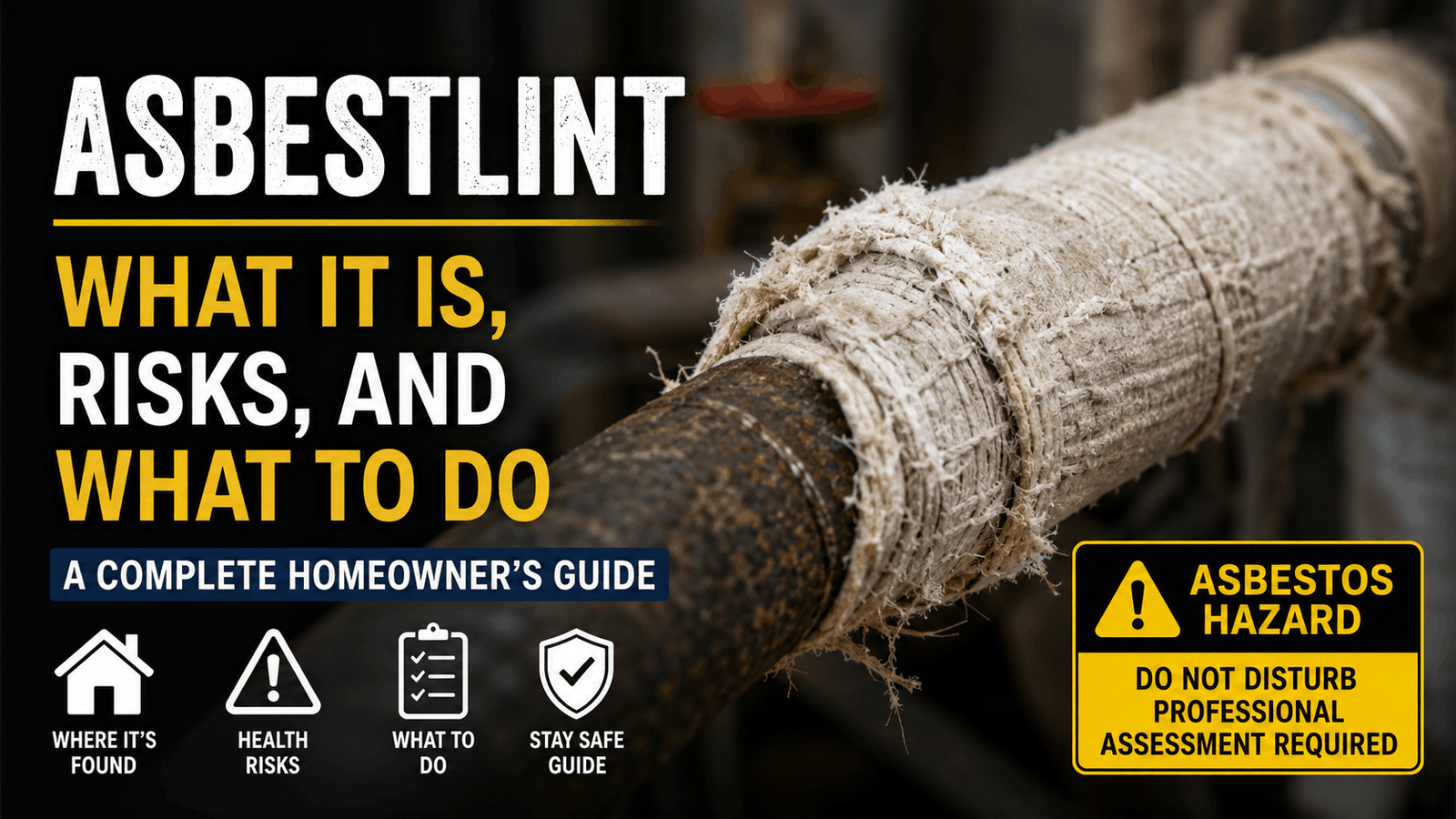
Asbestlint is a type of tape or wrapping material that contains asbestos fibers. It was commonly used for insulation purposes in older buildings and industrial facilities.
Back when asbestos was considered a useful construction material, manufacturers used it in many products because it could withstand high temperatures and resist fire.
Asbestlint was often wrapped around:
- Heating pipes
- Boilers
- Air ducts
- Electrical systems
- Industrial equipment
- Hot water pipes
The tape acted as insulation and helped reduce heat loss while improving fire protection.
At the time, it seemed like a smart solution. Years later, however, scientists discovered the serious health risks linked to asbestos exposure.
Why Was This So Popular?
It’s easy to wonder why asbestos was used so widely if it’s now considered dangerous.
The answer is simple. People didn’t fully understand the long-term health effects back then.
Asbestlint became popular because it offered several advantages.
Excellent Heat Resistance
Asbestos fibers can tolerate extremely high temperatures without melting or burning.
Fire Protection
One of the biggest selling points was fire resistance. Buildings using asbestos products were often considered safer against fires.
Durability
Unlike some insulation materials that wear out quickly, asbestos tape could remain effective for decades.
Cost-Effective
It was relatively affordable compared to alternative insulation materials available at the time.
Honestly, from a construction perspective, asbestos seemed almost perfect. The problem was that the health risks weren’t fully understood until much later.
Where Can Asbestlint Be Found?
Asbestlint is usually found in older structures built before strict asbestos regulations were introduced.
Common locations include:
- Pipe insulation
- Boiler rooms
- Heating systems
- Industrial plants
- Mechanical rooms
- Electrical installations
- Ventilation systems
- Furnace areas
If a building was constructed before the 1980s, there’s a chance asbestos-containing materials could still be present.
That doesn’t automatically mean danger, though. The condition of the material matters a lot.
How Does Asbestlint Look?
Identifying asbestos tape can be tricky.
Many insulation materials look very similar, and visual inspection alone isn’t enough to confirm asbestos content.
However, asbestlint often has some recognizable characteristics:
- White or gray color
- Cloth-like appearance
- Wrapped around pipes
- Fibrous texture
- Aging or brittle condition
Still, appearances can be misleading.
The only reliable way to determine whether a material contains asbestos is through laboratory testing.
Why Is Asbestlint Dangerous?
This is probably the question most people ask first.
The truth is that asbestos isn’t usually dangerous when left undisturbed and in good condition.
The problem starts when fibers become airborne.
How Exposure Happens
When asbestlint becomes:
- Damaged
- Cut
- Drilled
- Broken
- Sanded
- Disturbed during renovation
Tiny asbestos fibers may be released into the air.
These fibers are so small that people often cannot see them.
Once inhaled, they can remain in the lungs for many years.
That’s where the real health concerns begin.
Health Risks Associated with Asbestlint
Long-term exposure to asbestos fibers has been linked to several serious diseases.
Asbestosis
Asbestosis is a chronic lung condition caused by inhaling asbestos fibers over time.
Symptoms may include:
- Breathing difficulties
- Persistent coughing
- Chest tightness
- Reduced lung function
Lung Cancer
Research has shown a strong connection between asbestos exposure and lung cancer.
The risk increases further for people who smoke.
Mesothelioma
Mesothelioma is a rare but aggressive cancer associated almost exclusively with asbestos exposure.
Unfortunately, it often develops decades after exposure occurs.
Pleural Disease
Asbestos exposure can also cause thickening and scarring around the lungs.
Signs That Asbestlint May Need Attention
Not all asbestos-containing materials require immediate removal.
However, certain warning signs shouldn’t be ignored.
Look for:
- Cracks
- Fraying edges
- Water damage
- Loose fibers
- Visible deterioration
- Damage caused by maintenance work
If you notice any of these issues, it may be time to contact a professional.
What Should You Do If You Find Asbestlint?
Finding possible asbestos tape can feel a little alarming.
But honestly, the worst thing you can do is panic and start pulling it off yourself.
Instead, follow these steps.
Step 1: Leave It Alone
Avoid touching, cutting, scraping, or removing the material.
Step 2: Restrict Access
If possible, keep other people away from the area.
Step 3: Avoid Cleaning Nearby
Do not sweep, vacuum, or dust around the material.
These activities can disturb fibers.
Step 4: Contact an Expert
A qualified asbestos inspector can assess the situation safely.
Step 5: Arrange Testing
Professional testing provides clear answers and removes guesswork.
How Is Asbestlint Tested?
Testing is actually fairly straightforward when done by professionals.
The process usually involves:
Sample Collection
A small sample is carefully taken from the material.
Laboratory Analysis
The sample is examined using specialized equipment.
Results Report
The laboratory confirms whether asbestos fibers are present.
Testing is the safest way to know exactly what you’re dealing with.
Can You Remove Asbestlint Yourself?
Technically, regulations vary depending on where you live.
But in most situations, professional removal is strongly recommended.
Why?
Because improper removal can release asbestos fibers into the air and increase exposure risks.
Professional removal teams use:
- Protective clothing
- Specialized equipment
- Containment barriers
- Safe disposal methods
Honestly, asbestos isn’t something worth taking shortcuts with.
The Professional Removal Process
When asbestos tape must be removed, specialists generally follow a structured process.
| Step | Purpose |
|---|---|
| Inspection | Evaluate the material |
| Risk Assessment | Determine exposure risk |
| Containment | Isolate the work area |
| Removal | Safely remove materials |
| Disposal | Dispose of waste properly |
| Air Testing | Confirm safe air quality |
These procedures help minimize contamination.
Removal vs Encapsulation
Removal isn’t always the only option.
Sometimes professionals recommend encapsulation instead.
What Is Encapsulation?
Encapsulation means covering the asbestos-containing material with a protective sealant.
The goal is to prevent fibers from becoming airborne.
Benefits of Encapsulation
- Lower cost
- Less disruption
- Faster completion
- Reduced exposure risk
However, encapsulation is only suitable when the material remains stable and undamaged.
Home Renovations and Asbestlint
This is where many people unexpectedly encounter asbestos tape.
Renovation projects often disturb materials hidden behind walls, ceilings, and utility systems.
Common projects that uncover asbestlint include:
- Bathroom remodeling
- Pipe replacement
- Kitchen renovations
- Heating system upgrades
- Basement finishing
Before beginning major renovations in older buildings, an asbestos inspection is usually a smart idea.
It can prevent expensive surprises later.
Common Myths About Asbestlint
There are plenty of misconceptions surrounding asbestos.
Let’s clear up a few of them.
Myth 1: All Asbestos Must Be Removed Immediately
Not necessarily.
Undamaged asbestos materials can sometimes remain safely managed.
Myth 2: You Can Identify Asbestos by Looking at It
Visual inspection alone isn’t reliable.
Testing is necessary.
Myth 3: Small Amounts Are Harmless
Even limited exposure should be taken seriously.
Myth 4: New Paint Solves Everything
Painting over asbestos doesn’t automatically make it safe.
Professional assessment is still important.
Tips for Staying Safe Around Suspected Asbestlint
If you suspect asbestos tape is present, keep these precautions in mind.
Safety Checklist
- Avoid disturbing the material
- Do not drill nearby surfaces
- Keep children away from affected areas
- Avoid vacuuming the area
- Contact qualified professionals
- Follow local regulations
Simple precautions can significantly reduce risk.
FAQS
What is asbestlint?
Asbestlint is asbestos-containing tape or insulation material commonly used around pipes, ducts, and heating systems.
Is asbestlint always dangerous?
The greatest risk occurs when asbestos fibers become airborne due to damage or disturbance.
Can I identify asbestlint myself?
You may recognize potential signs, but laboratory testing is needed for confirmation.
Should I remove asbestos tape immediately?
Not always. The condition of the material determines the best course of action.
Can asbestos tape remain in place?
In some situations, yes. Stable materials can sometimes be safely managed instead of removed.
What should I do if I find suspected asbestlint?
Leave it undisturbed and contact a qualified asbestos professional for assessment.
Conclusion
Asbestlint was once a widely used insulation material because of its strength, durability, and impressive fire-resistant properties. Unfortunately, the health risks associated with asbestos exposure later changed how people viewed these products.
Today, finding asbestlint in an older building doesn’t necessarily mean immediate danger, but it does require caution. Understanding where it may be found, how it behaves, and when professional help is needed can make a huge difference.
The most important thing to remember is simple: don’t disturb suspected asbestos materials. Instead, seek expert advice, arrange proper testing, and follow recommended safety procedures.
A careful approach protects not only your property but also your long-term health.
