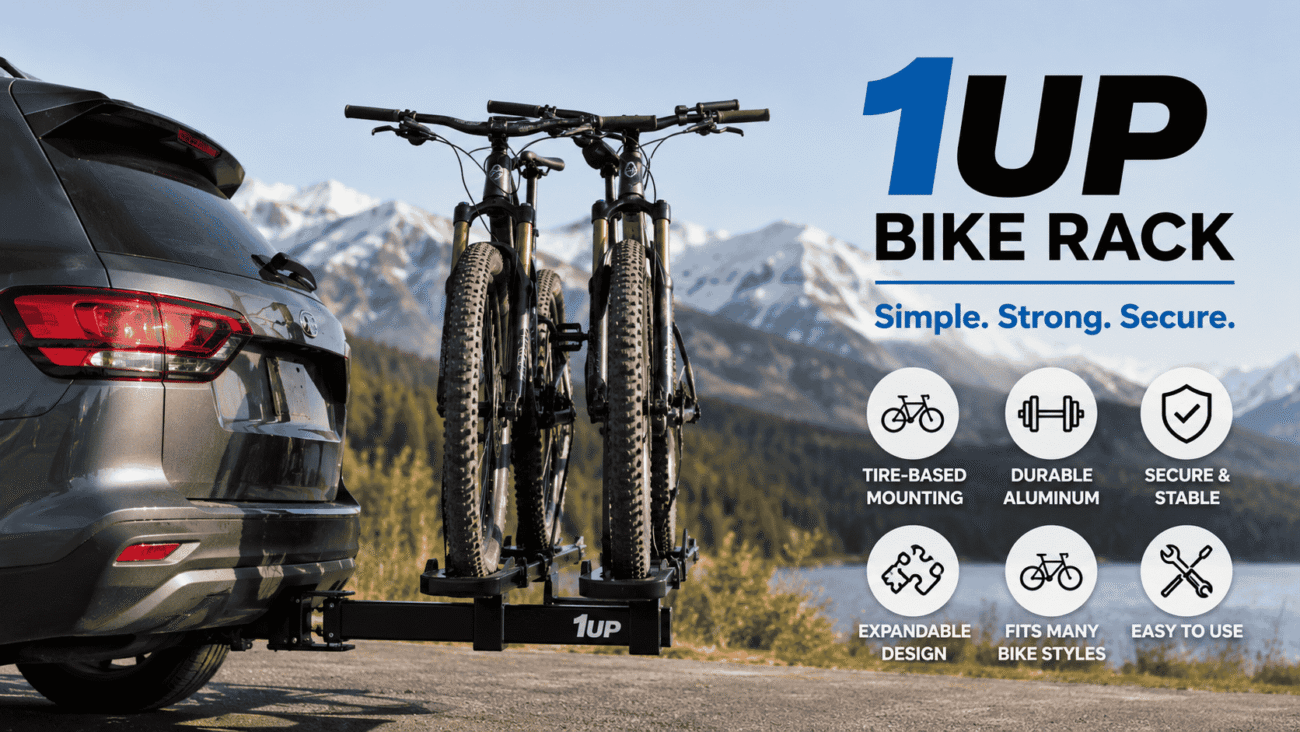
A reliable bike rack does more than transport your bicycle—it protects your investment while making every ride easier to plan. If you’ve been researching premium hitch-mounted racks, you’ve probably come across the 1UP bike rack. Known for its all-aluminum construction and minimalist design, it’s a favorite among cyclists who want durability without unnecessary complexity.
Whether you’re hauling a lightweight road bike, a full-suspension mountain bike, or a heavy electric bike, choosing the right rack isn’t just about capacity. It’s about ease of use, vehicle compatibility, and long-term reliability.
This guide explains how 1UP bike racks work, the differences between popular models, and what to consider before buying one.
What Makes a 1UP Bike Rack Different?
Unlike many traditional bike racks that rely on plastic parts or fabric straps, 1UP racks use a simple tray-style design that holds the bike by its tires rather than the frame.
That approach offers two important advantages. First, it reduces the chance of scratching your bike’s finish. Second, it allows the rack to work with many different frame styles, including carbon fiber bikes and step-through frames.
The result is a secure mounting system that appeals to everyone from weekend riders to serious cycling enthusiasts.
Tire-Based Mounting System
Instead of clamping onto the bike frame, adjustable arms press against the front and rear tires.
Because the frame isn’t touched, bikes with unusual geometries or delicate finishes are easier to transport safely.
This design also simplifies loading and unloading since there are fewer straps and adjustments to manage.
Aluminum Construction
One feature that consistently stands out is the rack’s aluminum build.
Aluminum resists rust better than ordinary steel, making it a practical option for riders who travel in rain, snow, or coastal areas where corrosion is a concern.
While regular maintenance is still recommended, the material contributes to the rack’s reputation for long-term durability.
Expandable Design
Many riders don’t always travel with the same number of bikes.
Several 1UP models allow owners to add extra trays later, making it possible to start with a single-bike rack and expand the setup as needed.
This flexibility can save money compared to replacing the entire rack when your needs change.
Who Should Consider a 1UP USA Bike Rack?
A 1UP USA bike rack isn’t designed for just one type of cyclist. Its versatility makes it suitable for a wide variety of riders.
Mountain Bike Riders
Mountain bikes often have wide tires, long wheelbases, and suspension components that make transporting them more challenging.
The tray-style design helps accommodate these features while keeping the bike stable during travel.
Road Cyclists
Road bikes usually have lightweight frames that owners want to protect from scratches and pressure points.
Since the rack holds the tires instead of the frame, it’s a popular choice for cyclists transporting carbon fiber bikes.
Gravel Bike Owners
Gravel bikes have become increasingly popular because they perform well on both pavement and dirt roads.
A tire-based rack adapts easily to these bikes without requiring additional frame adapters.
Electric Bike Owners
Many e-bikes weigh considerably more than standard bicycles.
Certain 1UP models are specifically designed to support heavier loads, making them suitable for riders who need extra carrying capacity.
Choosing the correct weight-rated model is essential before transporting an electric bike.
Key Features to Look For
While several versions are available, most buyers compare the same core features before making a decision.
| Feature | Why It Matters |
|---|---|
| Weight capacity | Determines whether the rack can safely carry your bike |
| Hitch receiver size | Must match your vehicle’s hitch |
| Expandability | Allows additional bike trays later |
| Tire compatibility | Supports different tire widths |
| Wheelbase support | Important for mountain and gravel bikes |
| Tilting mechanism | Provides easier access to the vehicle’s cargo area |
| Folding design | Makes storage and parking more convenient |
Rather than focusing on appearance alone, think about how and where you’ll use the rack throughout the year.
Vehicle Compatibility
Before ordering any rack, verify that it fits your vehicle’s hitch receiver.
Most models are designed for standard hitch sizes, but confirming compatibility in advance helps avoid unnecessary returns.
It’s also worth checking your vehicle’s tongue weight rating, especially if you plan to carry multiple or heavier bikes.
Ease of Loading
If you ride several times each week, convenience matters.
A rack that’s easy to load encourages you to spend less time preparing for a ride and more time on the trail or road.
The simple wheel-clamping system is one reason many experienced cyclists appreciate the 1UP design.
Understanding the 1UP Heavy Duty Bike Rack
Not every cyclist carries the same type of bike. While a standard rack may work well for lightweight road bikes, riders with electric bikes, downhill bikes, or heavier mountain bikes often need something more robust. That’s where the 1UP Heavy Duty Bike Rack comes in.
This version is built with higher weight limits and reinforced components, making it a practical choice for riders who regularly transport larger bicycles.
Designed for Heavier Bikes
Electric bikes continue to grow in popularity, but they also introduce new transportation challenges.
Many e-bikes weigh significantly more than traditional bicycles because of their batteries and motors. A heavy-duty rack provides the additional support needed to carry that extra weight safely.
Always check the rack’s published weight capacity and compare it with your bike’s actual weight before loading it.
Built for Frequent Use
Cyclists who travel every weekend or visit trails throughout the year often appreciate equipment that can handle repeated loading and unloading.
A heavy-duty rack is designed with long-term durability in mind, making it suitable for riders who expect regular use rather than occasional trips.
Ideal for Adventure Travel
Whether you’re driving to mountain trails, national parks, or cycling events, stability matters.
A sturdy rack helps minimize bike movement during long highway drives and rough access roads, giving riders more confidence while traveling.
Comparing Popular 1UP Bike Rack Options
Choosing the right model becomes easier when you compare the features that matter most.
| Feature | Standard Model | Heavy Duty Model |
|---|---|---|
| Best for | Road, gravel, and hybrid bikes | Mountain bikes and e-bikes |
| Weight capacity | Moderate | Higher |
| Expandable | Yes | Yes |
| Aluminum construction | Yes | Yes |
| Tire-based mounting | Yes | Yes |
| Frequent heavy use | Good | Excellent |
The best option depends on the bikes you currently own and those you may purchase in the future.
If there’s a chance you’ll upgrade to an e-bike, choosing a higher-capacity model now could save you from replacing your rack later.
How to Choose the Right 1UP Bike Rack
Buying a premium bike rack is an investment, so it’s worth considering more than just price.
Consider Your Bike Collection
Think about every bike you expect to transport.
If your household includes road bikes, mountain bikes, and children’s bikes, look for a rack with enough adjustability to accommodate different tire sizes and wheelbases.
Think About Future Needs
Many riders purchase additional bikes over time.
An expandable rack provides flexibility, allowing you to add another tray instead of replacing the entire system.
Check Hitch Compatibility
Before ordering, confirm your vehicle’s hitch receiver size.
Most passenger vehicles use standard hitch receivers, but verifying the measurements helps ensure a proper fit.
Also review your vehicle’s towing and tongue-weight specifications, especially if carrying multiple bikes.
Storage Space Matters
Some cyclists leave their rack installed year-round, while others remove it after each trip.
If garage space is limited, consider how easily the rack folds and whether it’s comfortable to carry when not attached to the vehicle.
Where to Find a 1UP Bike Rack for Sale
If you’re searching for a 1UP bike rack for sale, you’ll usually have several purchasing options.
Buy Directly From the Manufacturer
Purchasing directly can provide access to the newest models, replacement parts, accessories, and warranty support.
It’s often the best choice if you want the latest product configuration.
Check Local Bike Shops
Some bicycle retailers stock premium hitch racks or can special-order them.
Buying locally also gives you the opportunity to ask questions and sometimes see the rack in person before making a decision.
Consider Authorized Online Retailers
Online stores often make comparing models easier.
Before placing an order, confirm that you’re buying from an authorized seller so warranty coverage remains valid.
Used Market Considerations
A used 1UP rack can be an excellent value if it’s been well maintained.
Before purchasing second-hand, inspect:
- Aluminum trays for bends or cracks
- Moving arms and pivot points
- Hitch connection hardware
- Locking mechanisms
- Missing bolts or replacement parts
A careful inspection helps ensure you’re buying a rack that’s still safe to use.
Pros and Cons of a 1UP Bike Rack
Every bike rack has strengths and limitations. Understanding both sides makes choosing easier.
| Pros | Cons |
|---|---|
| Durable aluminum construction | Higher upfront cost than many entry-level racks |
| Holds bikes by the tires instead of the frame | Premium models may exceed some budgets |
| Expandable for additional bikes | Can be heavier than basic hanging racks |
| Suitable for many bike styles | Proper installation is essential |
| Minimal moving parts | Accessories may be sold separately |
For riders who transport bikes regularly, the long-term durability often outweighs the higher purchase price.
Common Mistakes to Avoid
Even an excellent bike rack won’t perform well if it’s used incorrectly.
Ignoring Weight Limits
Every rack has a maximum load capacity.
Exceeding that limit can affect both safety and rack performance, particularly when transporting electric bikes.
Skipping Regular Inspections
Road vibrations naturally loosen hardware over time.
Before each trip, check that bolts, locking mechanisms, and hitch connections remain secure.
Improper Bike Positioning
A bike should sit evenly in the wheel trays with the tire arms fully secured.
Rushing this step can allow unnecessary movement while driving.
Forgetting Overall Vehicle Length
Adding bikes to the rear of your vehicle changes its total length.
When parking or reversing, remember that the rack extends beyond the bumper to avoid accidental contact with obstacles.
Maintenance Tips to Extend the Life of Your 1UP Bike Rack
A premium bike rack is built to last, but regular maintenance helps it stay reliable year after year. Whether you use it every weekend or only during cycling season, a few simple habits can keep it operating smoothly.
Clean the Rack After Long Trips
Road grime, mud, salt, and dust can build up over time.
After returning from a trip, wipe down the rack with water and a mild cleaner. If you’ve driven on salted winter roads or near the coast, rinsing away residue is especially important.
Inspect Moving Parts
Although 1UP racks have a relatively simple design, moving components should still be checked regularly.
Look for signs of excessive wear, loose hardware, or anything that doesn’t move as smoothly as it should.
Tighten Hardware Periodically
Driving over rough roads creates constant vibration.
Every few trips, inspect bolts and fasteners to make sure they’re properly tightened according to the manufacturer’s recommendations.
Store It Properly
If you won’t be using the rack for an extended period, remove it from the vehicle and store it in a dry location.
Keeping it out of constant exposure to the elements can help preserve both its appearance and performance.
Expert Tips Before Buying a 1UP Bike Rack
Choosing the right rack becomes much easier when you focus on how you’ll actually use it rather than simply buying the most expensive model.
Buy for Your Future Bikes Too
Many cyclists eventually add another bike to their collection.
If you think you’ll upgrade to an electric bike or begin riding with family members, choosing an expandable model now may save money later.
Measure Everything First
Before placing an order, confirm:
- Hitch receiver size
- Bike weight
- Tire width
- Wheelbase length
- Vehicle tongue-weight capacity
A few measurements can prevent compatibility issues after delivery.
Think About Daily Convenience
If you ride frequently, you’ll appreciate features that make loading and unloading faster.
Small conveniences—like an easy-to-use wheel clamp or a tilting mechanism for rear cargo access—can make a noticeable difference over time.
Don’t Ignore Replacement Parts
Even durable products occasionally need maintenance.
Before buying, check whether replacement hardware and accessories are readily available. Easy access to parts can extend the useful life of your rack for many years.
Frequently Asked Questions
Is a 1UP bike rack worth the price?
For riders who transport bikes regularly, many consider the investment worthwhile because of the rack’s aluminum construction, tire-based mounting system, and long-term durability. The value ultimately depends on your riding frequency and transportation needs.
Can a 1UP Heavy Duty bike rack carry electric bikes?
Many heavy-duty models are designed with higher weight capacities that make them suitable for transporting certain electric bikes. Always compare your bike’s weight with the manufacturer’s specifications before use.
Will a 1UP bike rack fit every vehicle?
No. Compatibility depends on your vehicle’s hitch receiver size and weight limits. It’s important to verify both before purchasing.
Does the rack touch the bike frame?
One of the defining features of a 1UP bike rack is that it secures the bicycle by the tires rather than the frame. This design helps reduce the risk of scratches and accommodates many different frame styles.
Where can I find a genuine 1UP bike rack for sale?
The safest options include purchasing directly from the manufacturer, authorized retailers, or reputable local bike shops. If buying used, inspect the rack carefully for wear or missing components before completing the purchase.
Conclusion
A 1UP bike rack has earned a strong reputation among cyclists because of its thoughtful design, durable aluminum construction, and tire-based mounting system. Whether you’re carrying a lightweight road bike, a rugged mountain bike, or a heavier electric bike, there’s a model designed to meet a variety of riding needs.
If you’re considering a 1UP USA bike rack, take time to compare weight capacity, expandability, hitch compatibility, and the types of bikes you’ll transport most often. Riders who need extra strength should also evaluate the 1UP Heavy Duty bike rack, especially if electric bikes are part of the plan.
Before making a purchase, measure your vehicle, confirm compatibility, and buy from a trusted source. Choosing the right rack today can make every cycling trip more convenient while protecting your bikes for years to come.
