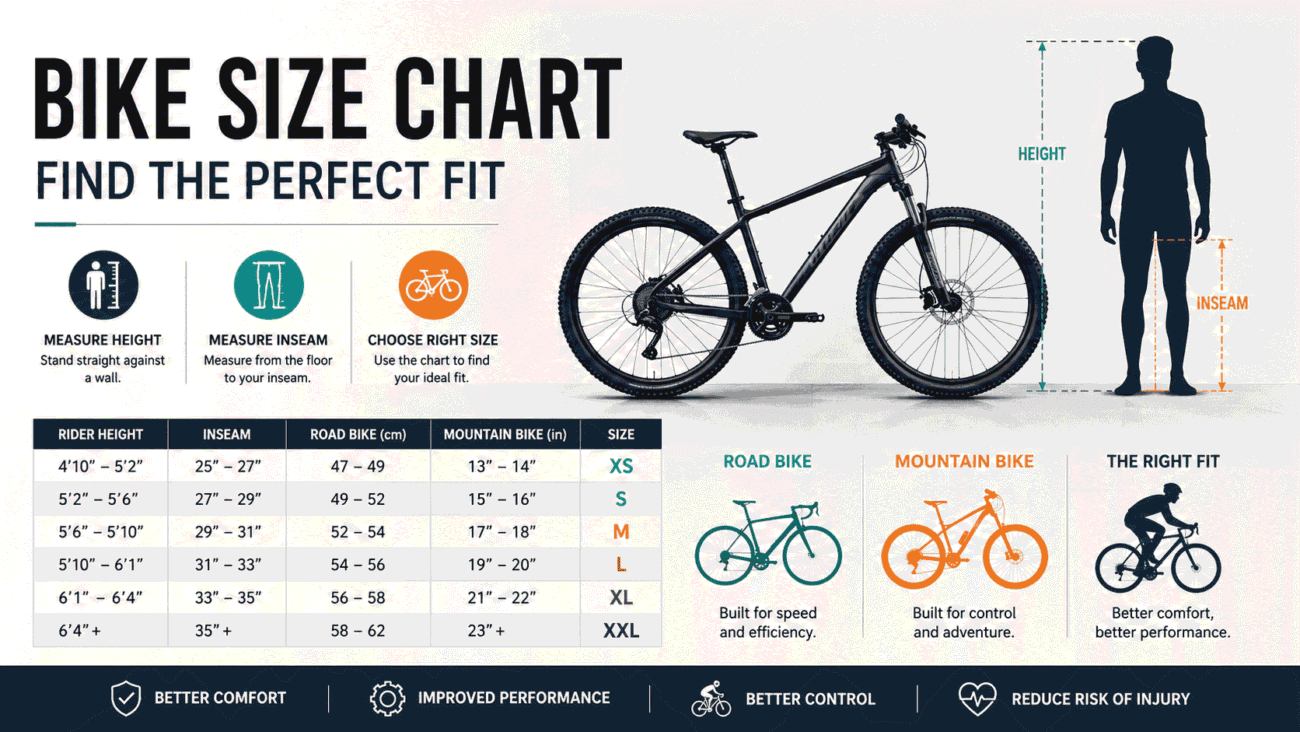
Buying a bike without checking the size is a bit like buying shoes without knowing your shoe size. It might work, but there’s a good chance you’ll end up uncomfortable. A bike that fits properly makes every ride easier, whether you’re commuting to work, training for a race, or exploring mountain trails on weekends bike size chart.
The good news is that choosing the right size isn’t as complicated as it seems. Most manufacturers follow similar sizing guidelines, and once you know your height and inseam measurement, you can narrow down the best frame size in just a few minutes.
In this guide, you’ll find an easy-to-understand bike size chart, along with dedicated sizing advice for road bikes, mountain bikes, and bike frames. You’ll also learn how different brands measure their bikes, common sizing mistakes to avoid, and expert tips for getting the most comfortable fit.
Why Bike Size Matters
Many first-time buyers focus on wheel size, color, or features before looking at the frame size. In reality, the frame is what determines how comfortable and efficient your ride will be.
A correctly sized bike helps you maintain better posture, reduces strain on your knees and back, and gives you more control while riding. Even a high-end bicycle can feel awkward if the frame doesn’t match your body.
On the other hand, riding a bike that’s too small or too large can lead to discomfort after just a few miles. You may notice sore shoulders, aching wrists, knee pain, or difficulty steering.
Some of the biggest benefits of choosing the right bike size include:
- Better riding comfort on short and long trips
- More efficient pedaling
- Improved handling and balance
- Reduced risk of injuries
- Greater confidence on different terrains
If you’re planning to spend hours on your bike each week, taking the time to find the right size is one of the smartest decisions you can make.
How to Measure Yourself Before Using a Bike Size Chart
Before looking at any bike frame size chart, you’ll need two simple measurements.
Measure Your Height
Stand barefoot against a wall with your back straight. Use a book or flat object on top of your head and mark the wall. Measure from the floor to the mark.
Record your height in either inches or centimeters, depending on the sizing chart you’re using.
Measure Your Inseam
Your inseam is often more important than your overall height.
Stand with your feet about six inches apart. Place a hardcover book firmly between your legs to mimic a bike saddle. Measure from the floor to the top edge of the book.
This measurement helps determine the frame size that provides enough clearance while allowing efficient pedaling.
Consider Your Riding Style
Two riders with the same height may choose different frame sizes depending on how they ride.
For example:
- A casual rider usually prefers a slightly more upright position.
- A road cyclist often chooses a more aggressive riding position.
- A mountain biker may size down slightly for better control on technical trails.
Your intended use plays an important role when selecting the perfect bike.
General Bike Size Chart
The table below provides a general starting point for adult riders. Keep in mind that every manufacturer has slightly different geometry, so always compare your measurements with the brand’s official recommendations before buying.
| Rider Height | Inseam | Recommended Frame Size | Typical Size Label |
|---|---|---|---|
| 4’10″–5’1″ | 25″–27″ | 13″–14″ | XS |
| 5’1″–5’5″ | 27″–29″ | 15″–16″ | S |
| 5’5″–5’9″ | 29″–31″ | 17″–18″ | M |
| 5’9″–6’0″ | 31″–33″ | 19″–20″ | L |
| 6’0″–6’3″ | 33″–35″ | 21″–22″ | XL |
| 6’3″–6’6″ | 35″+ | 23″–24″ | XXL |
Use this bike size chart as a starting point rather than a final answer. Factors like flexibility, arm length, and riding preference can influence your ideal fit.
Understanding Bike Frame Size Chart Measurements
When browsing bikes online, you’ll notice that manufacturers use different sizing systems. Some list frame sizes in inches, while others use centimeters or simple labels like Small, Medium, and Large.
Knowing what these measurements represent makes shopping much easier.
Frame Size in Inches
Mountain bikes commonly use inches to describe frame size.
For example:
- 15-inch frame
- 17-inch frame
- 19-inch frame
- 21-inch frame
The measurement generally refers to the seat tube length.
Frame Size in Centimeters
Road bikes often use centimeters instead of inches.
Common sizes include:
- 49 cm
- 52 cm
- 54 cm
- 56 cm
- 58 cm
- 61 cm
A rider who needs a 54 cm road bike might ride a 17- or 18-inch mountain bike.
Letter Sizes
Many modern brands simplify sizing by using:
- XS
- Small
- Medium
- Large
- XL
- XXL
These labels are convenient, but they aren’t standardized across brands. One company’s Medium may fit differently than another’s.
Always compare the manufacturer’s geometry chart before making a purchase.
Factors That Can Affect Your Ideal Bike Size
Even if two people are exactly the same height, they may not ride the same frame size comfortably.
Arm Length
Longer arms often make it easier to ride a slightly larger frame, while shorter arms may feel more comfortable on a smaller one.
Leg Length
Some riders have longer legs compared to their height. In these cases, inseam measurement becomes more important than total height.
Flexibility
Experienced cyclists with good flexibility can usually handle a more stretched riding position.
Beginners often enjoy a more upright posture that reduces pressure on the back and shoulders.
Bike Geometry
Frame size is only one piece of the puzzle.
Modern bikes vary in:
- Reach
- Stack height
- Wheelbase
- Seat tube angle
- Head tube angle
These geometry differences explain why two Medium-sized bikes can feel completely different during a test ride.
Should You Size Up or Size Down?
This is one of the most common questions bike buyers ask.
In many situations, choosing the smaller size is the safer option if you’re between two sizes.
A slightly smaller bike is generally easier to adjust using:
- A longer stem
- Seat height adjustments
- Saddle position
- Handlebar changes
A frame that’s too large is much harder to make comfortable because you can’t reduce its overall reach very much.
Professional bike fitters often recommend prioritizing control and comfort over simply choosing the biggest frame you can ride.
A short test ride can quickly reveal which option feels more natural.
Road Bike Size Chart
A road bike size chart is slightly different from a general bike chart because road bikes are designed for speed and efficiency. Riders typically lean forward more, which makes frame geometry especially important.
Road bike frames are usually measured in centimeters, although some brands now use letter sizes like Small, Medium, and Large.
Use the chart below as a reliable starting point.
| Rider Height | Inseam | Road Bike Frame Size |
|---|---|---|
| 4’10″–5’1″ | 25″–27″ | 47–49 cm |
| 5’1″–5’3″ | 27″–28″ | 49–50 cm |
| 5’3″–5’5″ | 28″–30″ | 50–52 cm |
| 5’5″–5’7″ | 30″–31″ | 52–54 cm |
| 5’7″–5’9″ | 31″–32″ | 54–56 cm |
| 5’9″–6’0″ | 32″–33″ | 56–58 cm |
| 6’0″–6’2″ | 33″–34″ | 58–60 cm |
| 6’2″–6’5″ | 34″+ | 60–62 cm |
Remember that a 54 cm frame from one manufacturer may fit differently than a 54 cm frame from another. Frame geometry, top tube length, and reach all influence how the bike feels.
Signs Your Road Bike Is Too Small
A road bike that’s too small often feels cramped. You may notice your knees coming too close to the handlebars, making it difficult to pedal smoothly.
Common signs include:
- Tight shoulders
- Bent elbows even while cruising
- Limited leg extension
- Feeling crowded on the bike
Signs Your Road Bike Is Too Large
An oversized road bike can be just as uncomfortable.
Watch for these warning signs:
- Stretching too far to reach the handlebars
- Neck or lower back pain
- Difficulty controlling the bike in corners
- Trouble standing over the frame
If you experience these issues during a test ride, consider trying the next smaller frame size.
Mountain Bike Size Chart
A mountain bike size chart differs from a road bike chart because trail riding requires greater maneuverability. Riders frequently shift their body position over rough terrain, so the bike needs to feel stable without being difficult to control.
Mountain bike frames are commonly measured in inches or by size labels.
| Rider Height | Mountain Bike Frame |
|---|---|
| 4’10″–5’2″ | 13–14 inches (XS) |
| 5’2″–5’6″ | 15–16 inches (S) |
| 5’6″–5’10” | 17–18 inches (M) |
| 5’10″–6’1″ | 19–20 inches (L) |
| 6’1″–6’4″ | 21–22 inches (XL) |
| 6’4″+ | 23 inches or larger (XXL) |
Always check the manufacturer’s recommendations because modern mountain bikes often have longer reaches than older models.
Hardtail vs. Full Suspension Sizing
Many riders wonder whether suspension changes the sizing.
In most cases, the recommended frame size stays the same, but the riding position may feel different.
Hardtail bikes generally provide a more direct feel, while full-suspension bikes compress slightly during riding, changing the effective geometry.
If you’re between sizes, many trail riders choose the smaller option because it offers quicker handling on technical sections.
Wheel Size Isn’t the Same as Frame Size
One of the biggest misconceptions is confusing wheel size with bike size.
For example, a mountain bike may have:
- 26-inch wheels
- 27.5-inch wheels
- 29-inch wheels
These numbers describe the wheels—not the frame.
A rider who needs a Medium frame could ride either 27.5-inch or 29-inch wheels depending on the bike’s design and intended use.
Bike Frame Size Chart Comparison
The easiest way to understand sizing is by comparing the three most common systems side by side.
| Rider Height | Bike Frame (Inches) | Road Bike (cm) | Letter Size |
|---|---|---|---|
| 4’10″–5’1″ | 13–14″ | 47–49 cm | XS |
| 5’1″–5’5″ | 15–16″ | 49–52 cm | S |
| 5’5″–5’9″ | 17–18″ | 52–56 cm | M |
| 5’9″–6’0″ | 19–20″ | 56–58 cm | L |
| 6’0″–6’3″ | 21–22″ | 58–60 cm | XL |
| 6’3″+ | 23–24″ | 60–62 cm | XXL |
This bike frame size chart makes it easier to compare different bikes when shopping across brands.
Women’s Bike Sizing
Many modern bike brands now design frames based on overall body measurements rather than gender. Still, some women’s-specific models include features such as:
- Shorter reach
- Narrower handlebars
- Women’s-specific saddle
- Shorter crank arms
Sizing generally follows the same height charts used for unisex bikes.
The best approach is to choose the frame that feels most comfortable rather than focusing on whether it’s labeled as a men’s or women’s model.
Kids’ Bike Size Basics
Children’s bikes are usually sized by wheel diameter instead of frame size.
Here’s a quick reference:
| Child Height | Wheel Size |
|---|---|
| 2’10″–3’4″ | 12-inch |
| 3’4″–4’0″ | 16-inch |
| 4’0″–4’5″ | 20-inch |
| 4’5″–4’9″ | 24-inch |
| 4’9″+ | Small adult bike |
Kids grow quickly, so avoid buying a bike that’s much too large with the hope they’ll “grow into it.” A properly fitting bike is safer and helps build confidence.
How to Test Whether a Bike Fits
Even after using a sizing chart, a quick fit check can prevent costly mistakes.
Stand-Over Clearance
When standing over the top tube with both feet flat on the ground, there should be a small amount of space between your body and the frame.
For mountain bikes, you’ll usually want a bit more clearance than on road bikes.
Saddle Height
When the pedal reaches its lowest point, your knee should remain slightly bent rather than completely straight.
A saddle that’s too low reduces pedaling efficiency, while one that’s too high can strain your hips.
Handlebar Reach
You should be able to comfortably reach the handlebars without locking your elbows or rounding your back excessively.
Your shoulders should feel relaxed, not stretched.
Test Ride Whenever Possible
No chart can replace riding the bike.
A short ride around a parking lot can reveal whether the bike feels balanced, responsive, and comfortable before you make a purchase.
Common Bike Sizing Mistakes
Even experienced riders occasionally choose the wrong frame because they focus on appearance instead of fit. Avoiding these common mistakes can save you from discomfort and expensive adjustments later.
Choosing Based Only on Height
Height is a useful starting point, but it doesn’t tell the whole story.
Two people who are both 5’10” can have very different inseam lengths, arm spans, and flexibility. One may fit perfectly on a Large frame, while the other feels more comfortable on a Medium.
Always consider both your height and inseam before deciding.
Ignoring Manufacturer Size Charts
There isn’t a universal sizing standard across the cycling industry.
For example, a Medium frame from one brand may have the same reach as a Large frame from another. That’s why it’s important to compare the manufacturer’s geometry chart instead of relying only on the size printed on the frame.
Buying a Bike That’s Too Large
Many riders believe a larger bike will be faster or more comfortable.
In reality, an oversized frame often causes:
- Neck pain
- Shoulder fatigue
- Lower back discomfort
- Reduced control while turning
A bike that’s slightly smaller is usually easier to adjust than one that’s too large.
Forgetting About Bike Geometry
Frame size is only one measurement.
Modern bikes are designed with different geometries depending on their purpose. A racing road bike has a stretched-out riding position, while an endurance bike encourages a more relaxed posture.
Similarly, two mountain bikes with the same frame size can feel completely different because of differences in reach, stack, and wheelbase.
Skipping a Test Ride
Sizing charts are helpful, but they can’t predict how a bike will feel once you’re riding it.
If possible, test ride a few different sizes before making your final decision. Even a 10-minute ride can reveal comfort issues that aren’t obvious on paper.
Expert Tips for Finding the Right Bike Size Chart
After helping riders choose bikes for years, experienced bike fitters often recommend focusing on comfort first and speed second.
A bike that fits well encourages you to ride longer, improve your fitness, and enjoy the experience.
Wear Your Cycling Shoes During a Fitting
If you normally ride with cycling shoes or thick athletic shoes, wear them when testing bikes.
Different shoes can slightly affect saddle height and overall riding position.
Don’t Chase an Aggressive Position
Professional racers often ride with low handlebars and long reaches, but that doesn’t mean it’s the best setup for everyone.
Most recreational riders benefit from a position that keeps their back comfortable and allows easy control of the bike.
Small Adjustments Make a Big Difference
A bike doesn’t have to fit perfectly straight from the showroom.
Many comfort issues can be solved by adjusting:
- Saddle height
- Saddle position
- Stem length
- Handlebar angle
- Tire pressure
These simple changes can transform how a bike feels without replacing the frame.
Consider a Professional Bike Fit
If you’re investing in an expensive road bike or planning to ride long distances regularly, a professional bike fitting can be worthwhile.
A bike fitter evaluates your flexibility, riding style, leg length, and body position to fine-tune your setup.
While not essential for every rider, it’s a valuable option for those who spend many hours in the saddle.
Road Bike vs. Mountain Bike Sizing
Although both bikes are designed around the rider’s height, they prioritize different riding experiences.
| Feature | Road Bike | Mountain Bike |
|---|---|---|
| Primary Goal | Speed and efficiency | Stability and control |
| Frame Measurement | Usually centimeters | Usually inches or S/M/L |
| Riding Position | Leaned forward | More upright |
| Handlebar Style | Drop bars | Flat or riser bars |
| Best Fit Priority | Efficient pedaling | Easy handling on rough terrain |
Understanding these differences helps explain why your ideal size may vary between bike types, even if your height stays the same.
FAQs About Bike Size Chart
Is it better to size up or size down on a bike?
If you’re between two sizes, a slightly smaller frame is usually the safer choice. It’s generally easier to adjust with saddle and stem changes, while a frame that’s too large can be difficult to make comfortable.
Can two bikes with the same frame size feel different?
Yes. Frame geometry varies between manufacturers. Reach, stack, top tube length, and wheelbase all influence how a bike fits, even if both are labeled as Medium or 54 cm.
How accurate is a bike size chart?
A bike size chart provides an excellent starting point, but it shouldn’t be your only guide. Your inseam, flexibility, riding style, and the manufacturer’s geometry should also be considered.
Does wheel size affect bike fit?
Not directly. Wheel size and frame size are different measurements. A rider may comfortably use 27.5-inch or 29-inch wheels on the same frame size, depending on the bike’s design.
Should beginners get professionally fitted?
Not necessarily. Most beginners can find a comfortable bike by using a reliable size chart and making basic adjustments. However, riders planning long-distance cycling or purchasing premium bikes may benefit from a professional fitting.
Conclusion
Finding the right bike isn’t just about choosing the latest model or your favorite color. A properly fitted bike makes every ride more enjoyable, whether you’re commuting through the city, training for your first century ride, or exploring challenging mountain trails.
A reliable bike size chart gives you a strong starting point, but it’s only one part of the process. Measuring both your height and inseam, comparing manufacturer recommendations, and understanding how different bike geometries affect fit will help you make a more informed decision.
Whether you’re using a road bike size chart, comparing a mountain bike size chart, or reviewing a bike frame size chart, remember that comfort should always come first. The right-sized bike improves control, reduces fatigue, and keeps you riding longer with greater confidence.
If possible, take a short test ride before buying and make small adjustments to the saddle and handlebars afterward. Those final tweaks often make the difference between a bike that’s simply rideable and one that feels like it was built just for you.
