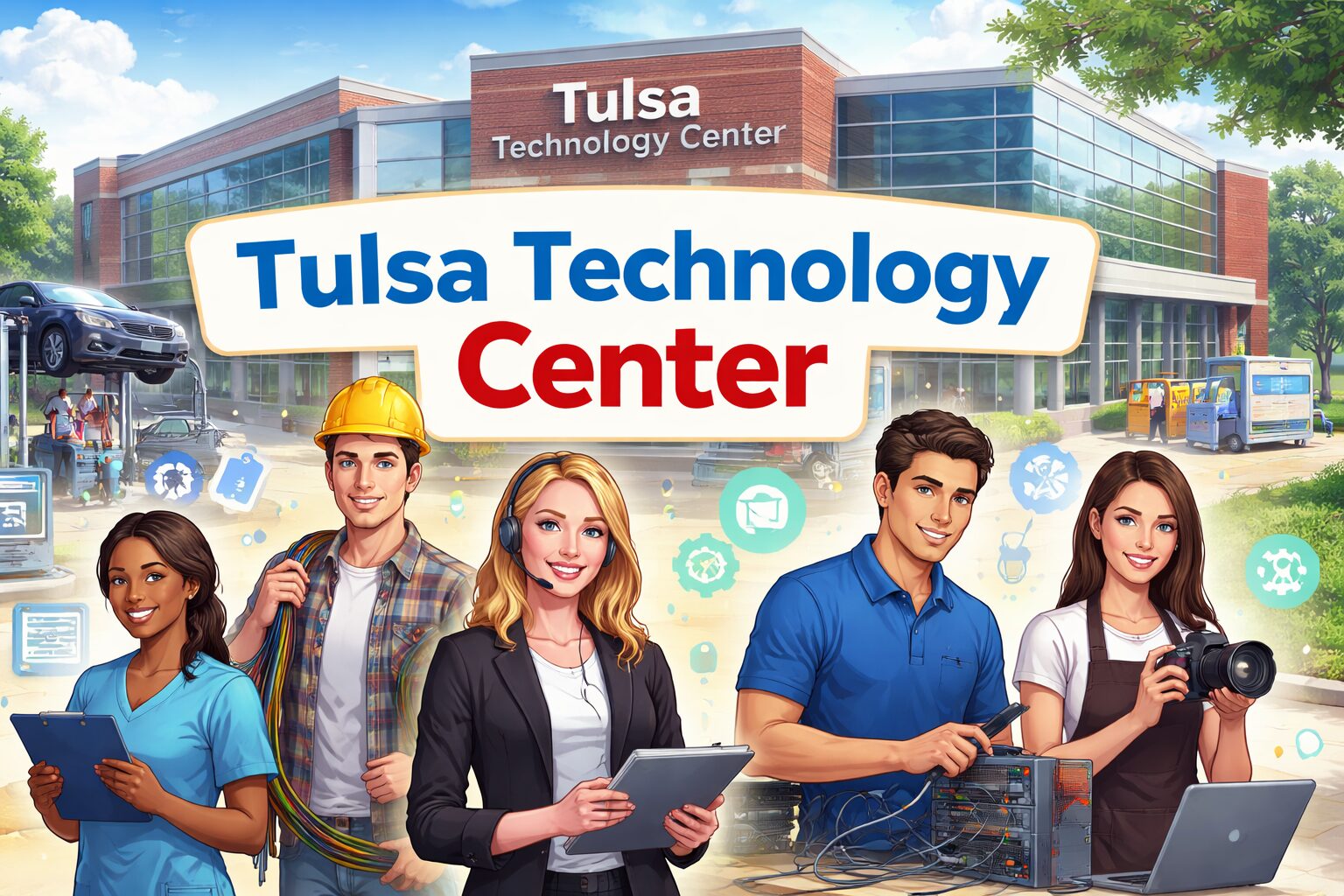
If you’re looking for hands-on, career-focused education in the Tulsa area, you’ve come to the right place. Tulsa Tech (as locals call it) is one of Oklahoma’s most respected technical education institutions — and for good reason. Whether you’re a high school student exploring your options, an adult looking to change careers, or an employer seeking skilled workers, this guide covers everything you need to know.
What Is Tulsa Technology Center?
Tulsa Technology Center is a public career and technology education (CareerTech) institution serving the greater Tulsa, Oklahoma region. It operates under the Oklahoma Department of Career and Technology Education and has been training students for real-world careers for decades.
Unlike a traditional four-year college, Tulsa Tech focuses on practical, job-ready skills. Programs are designed with local employers in mind, so graduates step into the workforce already knowing what their industry expects.
Quick Fact: Tulsa Tech serves over 20,000 students annually across its multiple campuses.
Campus Locations Across the Region
Tulsa Tech operates several campuses throughout the Tulsa metro area, making it accessible to students from different communities.
| Campus Name | Location | Primary Focus |
|---|---|---|
| Peoria Campus | Tulsa (North) | Health, Business, IT |
| Lemley Campus | Tulsa (East) | Manufacturing, Trades |
| Riverside Campus | Tulsa (South) | Culinary, Design, Media |
| Owasso Campus | Owasso, OK | General Career Programs |
| Broken Arrow Campus | Broken Arrow, OK | Technology, Business |
Each campus offers a mix of programs, but some specialties are concentrated at specific locations. It’s worth checking the official website for the most current program-to-campus mapping before you enroll.
Programs Offered: Something for Every Career Path
Tulsa Tech offers a wide variety of programs grouped into career clusters. Here’s a breakdown of the major areas:
Health Sciences
- Certified Nursing Assistant (CNA)
- Medical Assistant
- Dental Assisting
- Pharmacy Technician
- EMT and Emergency Medical Services
Information Technology
- Cybersecurity
- Computer Networking
- Web Development
- IT Support and Help Desk
Skilled Trades & Construction
- Electrician Training
- Plumbing Technology
- Welding
- HVAC (Heating, Ventilation & Air Conditioning)
- Carpentry and Construction
Business & Entrepreneurship
- Accounting and Finance
- Business Management
- Marketing
- Administrative Professional
Creative & Design
- Graphic Design
- Photography
- Cosmetology
- Interior Design
Culinary & Hospitality
- Culinary Arts
- Baking and Pastry
- Restaurant Management
This variety means students aren’t forced into a narrow box. Whether you’re drawn to healthcare, technology, or the skilled trades, there’s a clear path waiting for you.
Who Can Enroll?
Tulsa Tech serves two main student groups:
High School Students Students in grades 9–12 from partner school districts can enroll in Tulsa Tech programs during the school day. This lets them earn both high school credit and industry certifications at the same time — a huge advantage when entering the workforce or continuing education.
Adult Learners Adults (18 and older) can enroll in full-time or part-time programs. Many adult programs are designed to be completed in under a year, which is ideal for people who need to re-enter the workforce quickly.
How to Enroll: Step-by-Step
Getting started is easier than most people expect. Here’s a simple walkthrough:
- Visit the official website at tulsatech.edu and browse available programs.
- Choose your campus based on your location and the program you want.
- Attend an information session — Tulsa Tech regularly holds open houses and info nights.
- Complete the application online or in person (it’s free to apply).
- Meet with an advisor to confirm your program choice and discuss scheduling.
- Register for classes and arrange financial aid if needed.
- Show up and start learning — most programs begin with an orientation session.
The process is straightforward, and advisors are genuinely helpful at guiding new students through it.
Tuition and Financial Aid
One of the biggest advantages of Tulsa Tech is affordability. Compared to a four-year university, the cost is significantly lower.
| Cost Factor | Tulsa Tech | Typical 4-Year University |
|---|---|---|
| Annual Tuition (Adult Programs) | ~$3,000–$6,000 | $10,000–$30,000+ |
| Program Length | 6 months – 2 years | 4 years |
| Financial Aid Available | Yes | Yes |
| Free for High School Students | Yes (in most cases) | No |
Financial aid options include:
- Federal Pell Grants
- Oklahoma’s CareerTech Scholarship
- Workforce Innovation and Opportunity Act (WIOA) funding
- Veterans’ benefits and military tuition assistance
- Payment plans for adult students
Many students are surprised to find that grants cover a large portion — sometimes all — of their tuition costs.
Industry Certifications: The Real Value
Beyond a diploma or certificate of completion, Tulsa Tech prepares students for nationally recognized industry certifications. These credentials carry real weight with employers.
Examples include:
- CompTIA A+, Network+, Security+ (IT programs)
- AWS Certified Cloud Practitioner (Cloud Computing)
- NCCER credentials (Construction and Trades)
- ServSafe (Culinary and Food Service)
- OSHA 10/30 (Safety certifications)
- NASM Certified Personal Trainer (Fitness programs)
Having a certification from a nationally recognized body means employers across the country — not just in Tulsa — recognize your skills.
Employer Partnerships and Job Placement
Tulsa Tech works closely with local and regional employers. This isn’t just a talking point — it shapes how programs are built and updated.
Key employer relationships include:
- Local hospitals and healthcare networks (for Health Sciences grads)
- Manufacturing companies in the Tulsa industrial corridor
- Technology firms and startups in the growing Tulsa tech scene
- Construction and building trade companies
Many programs include externships, internships, or co-ops, giving students real workplace experience before they graduate. Some employers actively recruit directly from Tulsa Tech campuses.
Frequently Asked Questions (FAQs)
Q: Is Tulsa Technology Center accredited?
Yes. Tulsa Tech is accredited by the Council on Occupational Education (COE), and many individual programs carry their own specialized accreditations.
Q: Can I transfer credits to a college or university?
Some programs have articulation agreements with local colleges like Tulsa Community College (TCC) and Oklahoma State University–Tulsa. Ask an advisor about transfer options specific to your program.
Q: How long do programs take?
It depends on the program. Some certificate programs can be completed in as little as 6 months. Others, like cosmetology or health programs, may take 12–18 months. Most adult programs are designed to be completed within two years.
Q: Is there online learning available?
Tulsa Tech offers some hybrid and online components, particularly for theory-based coursework. However, many programs require hands-on lab time on campus.
Q: Do I need a high school diploma to enroll as an adult?
Not always. Some programs accept students who have a GED, and in some cases, Tulsa Tech can help connect you with adult basic education resources before enrollment.
Q: What are the class hours like for adult programs?
Most adult programs offer both day and evening options, making it possible to balance school with work or family responsibilities.
Conclusion
Tulsa Technology Center is more than just a training school — it’s a direct bridge between education and employment. With affordable tuition, flexible scheduling, industry-recognized certifications, and strong employer connections, it offers a clear and practical route to a fulfilling career.
Whether you’re a teenager figuring out your future, a working adult ready for a change, or someone re-entering the workforce, Tulsa Tech has the programs, support, and resources to help you succeed. The investment of time and money is modest compared to a traditional degree — and the return, in terms of job-readiness and earning potential, is very real.
If you’re in the Tulsa region and serious about building a career, Tulsa Technology Center deserves a serious look.
